
Dentistry
Dentistry’s guide to dental loupes
Last updated: 8th October 2025

Contents
Introduction
When it comes to dentistry, precision is everything. It’s the difference between good and exceptional care.
Dental loupes aren’t exactly the flashiest bit of kit in your practice, but they’re easily one of the most important.
The right loupes can take your precision and performance to a whole new level.
And your posture? Let’s just say your back will definitely thank you.
But there’s more to it than just ergonomics and accuracy. Loupes signal professionalism. You care about doing things properly, down to the smallest detail, and your patients notice that.
In this guide, we’re going to walk you through exactly what to look for when choosing your next pair of dental loupes.
Why should you wear dental loupes?
If you’re practicing dentistry without loupes, you’re making your job harder than it needs to be. Dental loupes provide three key clinical benefits:
1. Precision and accuracy
With loupes, every detail is magnified and illuminated. You catch things you’d otherwise miss, which means your work is cleaner and more accurate. Patients notice that difference.
2. Ergonomics
Dentistry takes a toll on your body. Back, neck, and shoulder pain are incredibly common. Loupes help by putting you in a natural, ergonomic position, so you can work comfortably throughout the day and protect your posture long-term.
3. More efficient workflow
Being able to see what’s going on more clearly doesn’t just improve accuracy, it speeds you up. You see exactly what needs to be done, get it right the first time, and move on. That means quicker appointments, less stress, and more patients served.
Myths versus facts
Even though loupes can completely change the way you work for the better, some dental professionals still, understandably, have reservations. Introducing loupes can feel like a big change if you’re used to working without them, so here are some of the common concerns addressed:
Myth: ‘I don’t want to become reliant on dental loupes. What if I can’t work without them?’
Fact – Think of loupes like any other tool. They’re meant to complement your skills, not replace them. Sure, you can work without them, but why limit yourself? The risk isn’t becoming dependent on loupes. The risk is falling behind your competitors who are using them to do more accurate work.
Myth: ‘They are uncomfortable to wear and will impact my efficiency while adjusting’
Fact – It’s true, loupes can feel awkward at first. But like any new tool, there’s a brief learning curve, but the payoff is huge. Once you get used to them, they make performing every procedure from fillings to crowns more comfortable and precise.
Myth: ‘They are a costly piece of kit’
Fact – Yes, loupes cost money upfront. But think of them as an investment, not a cost. They pay for themselves by reducing mistakes, rework, and even neck or back strain.
Myth: ‘There will be a barrier between me and my patients’
Fact – Loupes help you work more precisely and gently, which patients feel and value. They also indicate professionalism, which increases trust. If you’re concerned about patient interaction, flip-up loupes can make it easy to connect face-to-face when needed, so no barrier, just better care.
Myth: ‘I wear prescription glasses, so loupes are not ideal’
Fact – Most loupes can be customised to your prescription, giving clear vision and accurate magnification. Flip-up loupes let you easily switch between magnified and normal view, while TTL loupes can be tailored by your optometrist or loupe provider. Just bring your latest prescription, and you’re all set.
What dental professionals say
‘You should invest in loupes as early as possible
Colin Campbell, a specialist in oral surgery
because they’re the direction of travel for high-quality dentistry’
Colin Campbell
Colin Campbell is the founder and chairman of the Campbell Clinic and Campbell Academy. He has placed over 6,000 dental implants as an oral and implant surgeon. For Colin, using loupes has had a transformative impact.
A practitioner from a generation that initially overlooked magnification, Colin says loupes have played a pivotal role in enhancing his vision and improving the quality of his clinical work.
The primary reason I decided to incorporate magnification into my practice is that I wanted to see better. I come from that generation who never used magnification, and it took a little while for it to come through into our work culture because we thought our eyesight was satisfactory.
Colin Campbell
He added: ‘But, when I started to see my work in photography and on screen, I realised I needed a more precise field of view, light and consistency. The benefit of magnification and magnification with associated light is just enormous – and once you’ve seen it, you can’t go back, so incorporating loupes into my practice was driven by the fact that being able to see better would massively improve the quality of my work, which I think it did.
‘You should invest in loupes as early as possible because they’re the direction of travel for high-quality dentistry.’
Sorabh Patel
Sorabh Patel scooped the Best Young Dentist London title at the Dentistry Awards 2022. He graduated in 2018 and is now the practice principal at Dental Beauty Lee, a well-established, award-winning dental practice in Lee, South East London, where he prioritises ethical cosmetic dentistry with a minimally invasive approach.
He is one of the founders of the Deciduous Young Dentist platform. He strives to help young dentists nationwide by offering guidance and advice and championing mental health; his endeavours have also led to industry awards during his time as a student.
There are three non-negotiable things for me, which every foundation training (FT) dentist should do. Within the first three years of graduating, buy a camera, buy loupes and enrol in a year-long postgraduate course… You need loupes – if you can’t see what you’re doing, how will you ever get better?
Sarobh Patel
Anna Middleton
For dental therapist Anna Middleton, wearing loupes began with a quest to alleviate pain in her back and neck.
It all started with having pain in my upper back and my neck. I wanted to increase my visibility when treating patients. And while always tell patients to look after their oral health, as a clinician it was important that I look after my physical health as well.
Anna Middleton
She said: ‘I’m currently using the new Ergo loupes, which I am absolutely in love with. Wearing loupes has helped to correct my posture and neck and improve my vision. One of the other things that I absolutely love about Orascoptic loupes is the light solutions that come with it as well. The spark light is a tap-on/tap-off system with the light is built in and the switch is simply on the side.’
Craig Parker
Craig Parker is a practice principal at Primley Park Dentistry in Leeds.
I’ve been working with loupes for as long as I’ve been practising, which is over 30 years. I practised for about a year without loupes, but around 30 years ago, I put some on to scale and polish and thought they were amazing.
Craig Parker
He added: ‘I’ve not taken them off since! They’re indispensable. I can’t imagine how people can be without them now. It doesn’t matter what stage they’re at in their career, I think everyone should be wearing loupes.’
What are the different types of dental loupes?
Dental loupes come in various types, each with its features and benefits.
Each type offers unique advantages, and the choice depends on factors such as magnification requirements, comfort, field of view and budget. Here are some standard options:
Galilean loupes
Think of these as the starter pack for dental loupes. They’re light, simple, and usually more budget-friendly. The magnification is lower (typically 2.0x–3.8x), which makes them perfect for everyday dentistry and for those just starting out with loupes.
Best for: Comfort, long wear times, and beginners who want an easy introduction to loupes.
Prismatic loupes
Offer higher magnification (up to 6.0x) and use prism technology to redirect light, allowing for a wider field of view for detail-heavy procedures.
The trade-off? They’re heavier and often more expensive, but if you’re about pinpoint precision, they’re worth the investment.
Best for: specialist detailed procedures, and anyone who values clarity over comfort.
Flip-up loupes
Flip-up loupes do exactly what the name says – they flip up out the way when you don’t need them, so you can easily switch between magnification and normal vision. This is super handy because you can maintain that patient interaction and still view computer screens easily without feeling locked in.
They’re also attached to a frame, so the angle and distance can be adjusted to fit your preference.
Downside: due to the framework, they are bulkier and offer a smaller field depth than through-the-lens (TTL) loupes.
Best for: Flexibility, patient interaction, and dentists who want one loupe setup for multiple tasks.
Through-the-lens (TTL) loupes
Custom-made to specific working distances for optimal ergonomic positioning. TTL loupes are mounted directly into the lenses of your glasses, meaning they are lightweight and offer excellent comfort.
The broader depth of field allows focus at different levels and greater tolerance during movement.
The catch? They’re not adjustable. What you order is what you get. They also tend to cost more due to their advanced, custom features.
Best for: Everyday wear, comfort, and dentists who want a permanent, tailored solution.
Custom loupes
Tailored to the practitioner’s specific needs and preferences, which may include magnification, working distance, frame style, and even lens type (Galilean or TTL). Their main goal is to optimise comfort, precision, and posture for the user.
Downside: they’re usually more expensive. Some features, such as working distance or magnification, are fixed once made.
Best for: Dentists who want a fully personalized loupe setup for specific procedures or long-term use.
Additional features
LED dental loupes
Precision optical devices with integrated LED lights, offering enhanced illumination and magnification for dental procedures. Designed to improve visibility and accuracy, they provide dentists with a clear, well-lit view of the oral cavity, enhancing diagnostic capabilities and treatment outcomes. With lightweight construction and adjustable features, LED dental loupes ensure comfortable usage during lengthy procedures, promoting ergonomics and reducing strain.
Wireless loupes
Dental loupes with a wireless light offer enhanced precision and illumination during procedures, optimising dental professionals’ visibility and accuracy. Integrating a wireless light eliminates the hassle of managing cords, allowing for greater freedom of movement and comfort. This innovative technology represents a significant advancement in modern dentistry, fostering improved patient outcomes and practitioner ergonomics.
Loupe-mounted cameras
Some loupes come with integrated cameras, allowing dentists to capture images or videos of procedures for documentation or patient education purposes. They offer real-time visualisation, allowing for better patient communication and documentation of procedures. Their ergonomic design ensures comfortable usage during intricate dental procedures.
What to consider before purchasing dental loupes
When buying loupes, several essential factors must be considered to ensure you get the right ones for your needs. Before purchasing, weigh factors such as magnification strength, ergonomic design, light source compatibility, and manufacturer reputation for optimal performance and comfort during procedures.
In the dynamic landscape of modern dentistry, selecting the right dental loupes demands careful consideration of various factors.
Magnification power
Magnification matters and typically ranges from 2x to 8x or more.
Consider starting with a magnification level of 2-3x, as this offers the best depth of field for most clinical tasks. Higher magnification provides more detail – perfect for seasoned loupe users or clinicians who perform more exacting procedures – but may have a smaller field of view and require more precise positioning. Decide on the level of magnification you need based on specific clinical requirements.
-
- Fixed magnification: These loupes contain one specific magnification best suited to your regular procedures.
-
- Variable magnification: Clinicians can select different levels of magnification and field size to best match the procedure they are performing – an all-in-one loupe. They were introduced to the market in 2015 by Orascoptic with EyeZoom, which offers variable magnification options that continue to evolve and provide versatility and efficiency.
Working distance
Every dentist may have slightly different working preferences and techniques. Choosing dental loupes with adjustable working distances allows for customisation to match individual needs, ensuring optimal comfort and performance for each practitioner.
-
- Choose dental loupes with a working distance that matches your needs to maintain a comfortable posture and avoid strain. Dental loupes with the appropriate working distance allow dentists to work with a natural posture, reducing the risk of musculoskeletal issues in the long term.
-
- Loupes with the correct working distance provide optimal magnification and field depth, enhancing the oral cavity’s visibility. This improves precision and accuracy during procedures, leading to improved treatment outcomes.
-
- Working at an incorrect distance can strain the eyes, leading to discomfort and fatigue. Dental loupes customised to your working distance reduce eye strain by providing clear and focused vision without excessive squinting or eye strain.
Field of view
Considering the field of view (FOV) when selecting dental loupes is essential for optimising visual clarity, procedural efficiency and ergonomic comfort – all of which contribute to high-quality dental care.
-
- The FOV refers to the area visible through the loupes’ magnification. A larger FOV lets you see more of the oral cavity simultaneously, enhancing overall awareness during procedures. This can improve accuracy, efficiency and patient outcomes.
-
- With a wider FOV, you can better visualise details such as tooth surfaces, gum tissues, and surrounding structures, which are crucial for precise diagnosis and treatment. It helps detect issues that may be missed and enables them to perform procedures confidently.
-
- Additionally, a broader FOV reduces the need for frequent head movements or adjustments, which can minimise strain on the neck and improve ergonomic comfort during lengthy procedures. This is especially important for preventing musculoskeletal issues commonly associated with dental work.
Depth of field
This refers to the range of focus the loupes provide. A larger depth of field allows you to maintain focus on objects at varying distances, which is crucial for tasks requiring precision.
Frame design
It is essential to carefully consider frame design before investing in dental loupes to ensure optimal comfort and ergonomic fit, which can significantly reduce strain during lengthy procedures, ultimately enhancing precision and reducing the risk of musculoskeletal issues.
Additionally, selecting a well-designed frame can improve the overall durability and longevity of the loupes, ensuring they remain a reliable tool for years to come.
Weight and comfort
You will likely wear loupes for extended periods. Lighter loupes with ergonomic designs are preferable to minimise strain on your neck and back.
Quality of optics
Look for loupes with high-quality optics to ensure clear, distortion-free vision. Coatings such as anti-glare and anti-fog can enhance visibility and comfort during procedures.
Customisation optsions
Dental loupes offer customisable features, including magnification levels ranging from 2x to 8x, adjustable working distances for comfort and posture, frame styles in materials like titanium or plastic, and lens types such as prismatic or Galilean lenses.
-
- Additional options include integrated LED lighting, optical coatings for glare reduction, custom prescription lenses, and choices between flip-up or through-the-lens designs.
-
- Colour options for frames and warranty/service plans further enhance personalisation, allowing dental professionals to optimise comfort, performance and functionality during procedures that best suit them and their way of delivering high-end dental care.
Durability
Dental loupes are a significant investment. Ensuring they are durable and come with a good warranty protects this investment. If they break or malfunction, having a warranty means they can be repaired or replaced without additional cost, saving money in the long run.
-
- They should be designed to withstand frequent use and handling. A durable pair of loupes will last longer and perform consistently over time, ensuring reliable use throughout their lifespan.
-
- Durability often goes hand in hand with comfort and ergonomic design. A well-built pair of loupes will be more comfortable for extended periods, reducing strain on the neck, shoulders, and eyes. This can lead to improved focus and productivity during procedures.
Lighting
If you use additional lighting sources such as dental headlights, ensure your loupes are compatible and provide sufficient clearance.
Alternatively, consider a wireless dental loupe light. The light source is usually an LED, preferred for its longevity, energy efficiency, and cool operating temperature.
-
- Wireless dental loupe lights utilise battery-powered operation and wireless connectivity to eliminate the need for cumbersome cords. This feature enhances mobility and allows for greater freedom of movement during procedures.
-
- The light is typically attached to the frame of the dental loupes using a clip or mounting bracket. This ensures the light remains appropriately aligned and focused on the examined or treated area.
-
- Most wireless dental loupe lights offer brightness and beam focus adjustable settings. Clinicians can customise the light intensity and focus to suit their specific needs and preferences for each procedure.
-
- Battery life is an essential consideration for wireless dental loupe lights. High-quality lights are designed to provide extended battery life to ensure uninterrupted daily use. Some lights may also feature quick-charging capabilities for added convenience.
-
- Wireless dental loupe lights are designed to be lightweight and ergonomic, minimising fatigue during lengthy procedures. The design should allow for comfortable wear and easy adjustment to accommodate different head sizes and shapes. They should be designed to withstand sterilisation processes such as autoclaving or chemical disinfection.
Ergonomic benefits
Dental professionals should consider declination or viewing angle when selecting dental loupes to ensure optimal ergonomic posture during procedures, reducing the risk of musculoskeletal strain.
Proper declination and viewing angle enhance visibility and precision, which are crucial for intricate dental work, ultimately improving clinical outcomes. By prioritising these factors, professionals can safeguard their long-term comfort and performance.
Warranty and support
Dental loupes are a significant investment for professionals, and having a warranty ensures protection against manufacturing defects or malfunctions, reducing additional costs for repairs or replacements.
- The longevity of the warranty reflects the manufacturer’s confidence in the quality and longevity of their product, suggesting their range is built to last. This offers customers peace of mind.
- With coverage for servicing and repairs and reliable customer support, a warranty enhances the overall value proposition, providing assurance and support throughout the lifespan of the loupes, making it a worthwhile investment.
Budget
Dental loupes are a significant investment, so determine your budget and compare the features and quality of different dental loupe brands. While quality loupes may come at a higher price, they are a long-term investment in your comfort and professional performance.
Some companies may offer financing options for dental loupes, especially if they are high-end or specialised equipment.
Reviews and recommendations
As always, it is worth speaking with colleagues or mentors and reading reviews to make informed dental loupes price comparisons. Those who have experience with different brands or models will offer insight.
By carefully considering these factors, you can select dental loupes that enhance your precision, comfort and overall efficiency during procedures.
Options to try before you buy
Attend trade shows or conferences to explore different loupe options first-hand. Purchasing during your foundation year may yield discounts and group purchases could increase savings.
Investing in loupes early in your career can significantly impact your clinical techniques and overall efficiency. While they may not be necessary for every procedure, they prove invaluable for complex cases, contributing to improved clinical outcomes.
Orascoptic loupes models

Orascoptic offers a comprehensive range of dental loupes designed to meet the diverse needs of dental professionals. The loupes are crafted with precision optics to provide clear magnification, allowing for improved visualisation during procedures.
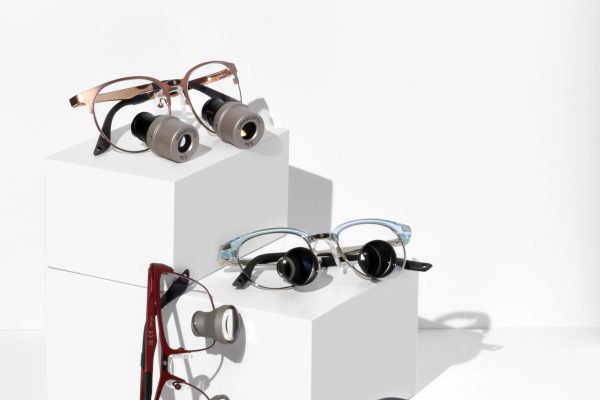
Orascoptic’s range comes in various magnification levels, catering to different preferences and procedural requirements. Their loupes are customisable to ensure a comfortable fit for each individual, with options for frame styles, colours and nose pad designs.
They combine advanced optics, customisable features, and ergonomic design to enhance precision, comfort, and efficiency for dental professionals across various specialties.
Orascoptic’s technology has seen them recognised as winners of 19x Townie Choice Awards and 9x Cellerant Best of Class Technology Awards.
Powered frames
Orascoptic have combined industry-leading optics and award-winning headlight into a single, lightweight solution.
Dragonfly is a unique frame with fully integrated battery power and circuity operating with a built-in headlight, freeing you from the hassle of cables.
This innovative counter-balance design affords all-day comfort by reducing the weight on your nose bridge by as much as 30% compared to a traditional frame.
Fixed magnification
Orascoptic’s award-winning fixed magnification loupes range from 2.5x to 5.5x magnification power. These provide a generous field of view and edge-to-edge clarity, allowing for enhanced visibility and improved ergonomic positioning. These loupes contain one specific magnification best suited to the types of procedures clinicians perform regularly.
Variable magnification
Until the introduction of Orascoptic’s EyeZoom in 2015 – the first variable magnification loupe – all loupes employed only a single magnification power and a static field-of-view; these limitations confined the clinician to just one visual perspective of the operating site. The unique versatility of variable magnification telescopes empowers the clinician to choose different levels of precision and field size based on the type of procedure they perform.
With the EyeZoom family of loupes, you can zoom in to higher magnification for more exacting procedures and zoom out when a more extensive field size is desired. The EyeZoom family of loupes offers three different telescope options, affording healthcare professionals unprecedented magnification.
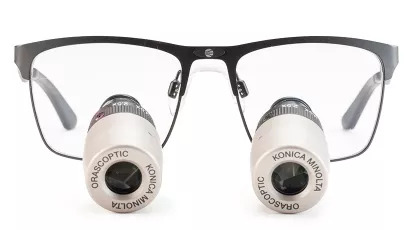
Features two-step variable magnification technology that allows users to switch between 2.5x and 3.5x. A consistent working distance at each magnification level helps to reduce the need to reposition when alternating between magnification levels.
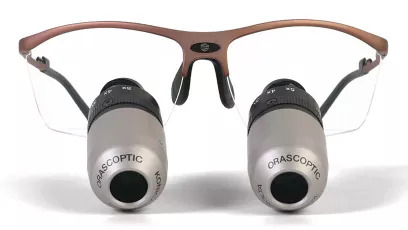
The first and only 3-in-1 variable magnification loupe. Switch seamlessly between magnification levels 3x, 4x and 5x. Working distance and declination angle are customised to each user. Numerous frame options are available.
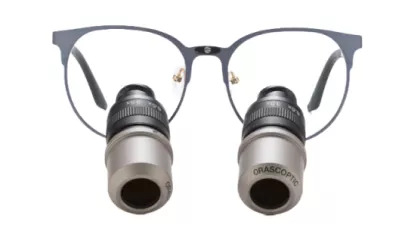
The newest addition to the Orascoptic variable magnification family and the highest magnification ever. Switch seamlessly between 3.5x and 6.5x magnification levels. The generous field size of the 3.5x magnification and the ability to exact procedures using 6.5x magnification create a versatile loupe experience. Ideal for general practitioners performing endodontic procedures, EyeZoom Max eliminates the need to switch loupes during procedures.
Ergo [or deflection] loupes feature refractive prisms that enable practitioners to sit up straight and reduce neck tilt. These loupes help to fight work-related neck discomfort, improve posture and prolong a career. These are well-suited for those clinicians looking to alleviate chronic pain or want to begin a loupe-wearing journey with ideal ergonomic positioning.
RDH ERGO 3.0x
The deflection optics improve posture without sacrificing vision. The RDH Ergo loupe is an ergonomic option that delivers all-day comfort by using refractive prisms to allow hygienists to sit up straight and reduce neck tilt, preserving their career.
HDL ERGO 3.5x
Orascoptic’s high-definition Ergo loupe with verified 3.5x magnification. The high-definition Ergo loupe allows you to work comfortably and preserve your career. Our deflection optics improve posture without sacrificing vision. The HDL Ergo loupe is an ergonomic option that delivers all-day comfort by using refractive prisms to allow clinicians to sit up straight and reduce neck tilt.
HDL ERGO 5.0x
Orascoptic’s highest deflection, this ergo loupe is ideal for exacting procedures such as root canals and apicoectomies. The high-definition Ergo loupe allows you to work comfortably and preserve your career. Our deflection optics improve posture without sacrificing vision. The HDL Ergo loupe is an ergonomic option that delivers all-day comfort by using refractive prisms to allow clinicians to sit up straight and reduce neck tilt. The HDL Ergo 5.0x magnification is the highest level offered in a deflection loupe, making it the loupe of choice for clinicians performing exacting procedures.
Request a demo
Summary
A high-quality pair of loupes isn’t a luxury anymore, it’s the standard for modern dentistry. The right pair will sharpen up your work, protect your posture, and show your patients you’re serious about delivering the very best. Here’s what we recommend when choosing your next pair:
Do your homework: Have a good look at what’s out there. Galilean, prismatic, TTL, flip-ups – get a feel for the different types and think about what really matters to you (comfort, magnification, budget, or all of the above).
Book a demo: Most loupe providers will happily let you try before you buy. Reach out to a couple and book demos so you can feel the difference for yourself.
Get fitted properly: Your working distance and angle need to be spot on to feel the full benefits. Let the experts measure you up. It’s worth it!
Receive your loupes: When they arrive, wear them in. Get used to the feel, the view, and how they change your workflow.
Stick with it: The first week or two might feel a bit clunky. That’s normal. Push through the learning curve and before long you’ll wonder how you ever worked without them.
Frequently asked questions
What magnification level should I choose for my dental loupes?
The ideal magnification level varies depending on personal preference, procedure type, and individual eyesight. It’s recommended to test different magnification levels to find the most comfortable and practical option for your practice.
How do I ensure a proper fit for my dental loupes?
Achieving a correct fit is crucial for comfort and effectiveness. Consider factors such as interpupillary distance (IPD) adjustment, frame size and ergonomic design when selecting loupes. Many manufacturers offer customisable options to tailor loupes to individual specifications. Additionally, professional fitting services are available to ensure an optimal fit and alignment.
What are the benefits of investing in LED illumination for dental loupes?
LED illumination integrated into dental loupes provides direct, shadow-free lighting, enhancing visibility and colour rendition during procedures. LED lights are energy-efficient, lightweight, and offer adjustable intensity settings to accommodate varying lighting conditions. Investing in LED illumination can improve procedural accuracy, reduce eye fatigue and enhance patient satisfaction.
How do I maintain and care for my dental loupes?
Proper maintenance is essential to prolong the lifespan and performance of dental loupes. Regularly clean lenses and frames with a soft, lint-free cloth and mild cleaning solution. Avoid exposure to harsh chemicals, extreme temperatures and impact damage. Store loupes in a protective case when not used, and schedule routine inspections and adjustments with the manufacturer or authorised dealer to ensure optimal function.
Stay updated with relevant information about this webinar