
Dentistry|Restorative dentistry
Tooth regrowth in adults: what we know so far
Last updated: 3rd November 2025
Contents
Many studies have explored the possibility of regenerating natural teeth in recent years. We review the research to determine how and when tooth regrowth might be possible in the future.
According to the World Health Organization (WHO), the global prevalence of complete tooth loss stands at 7% among those aged 20 and over. For those over 60, the percentage rises to 23%. In the UK, the government estimates that 5% of adults over 16 have no natural teeth.
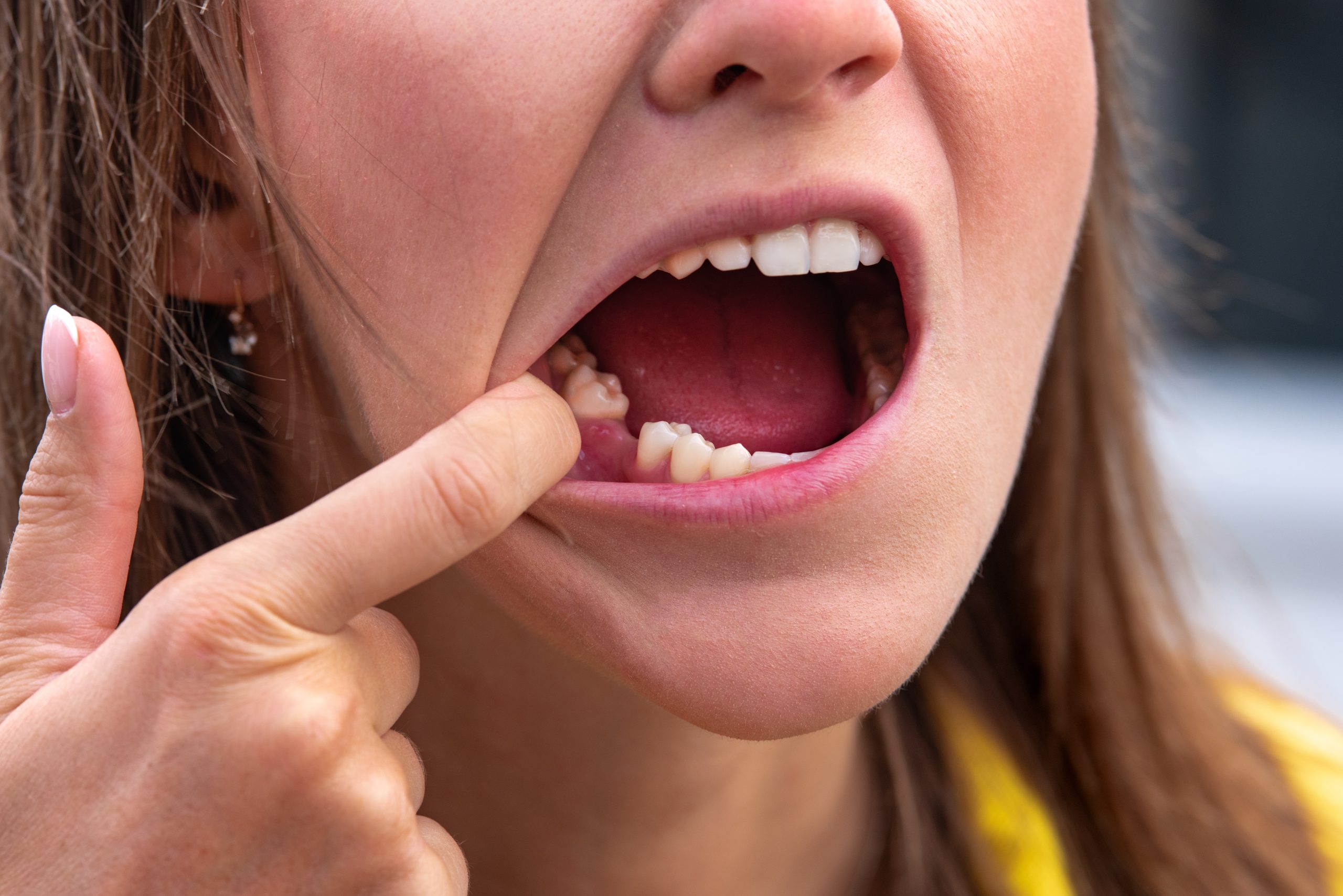
Currently, there is no publicly available method for regrowing lost or damaged teeth. The most common solutions for tooth loss are dental implants, dental bridges and dentures. All of these options involve an artificial replacement for the tooth rather than a natural regrowth.
However, the possibility of regrowing or regenerating natural teeth has been explored by several previous studies. Mechanisms such as RNA, stem cells and mineral regeneration have all seen various degrees of success in repairing or replacing damaged teeth.
Whole tooth regrowth with RNA
In July 2023, researchers from the Medical Research Institute Kitano Hospital in Osaka, Japan announced the development of a new tooth regrowth medicine. It uses RNA to administer antibodies against a molecule called USAG-1 which inhibits bone growth proteins.
Development of the medicine took approximately eight years, beginning in 2005.
How does the medicine regrow teeth?
Katsu Takahashi is lead researcher and head of the dentistry and oral surgery department at the Medical Research Institute Kitano Hospital. His research is based on the idea that humans once grew a third set of teeth following the milk and adult dentition. Dr Takahashi said that humans lost the ability to generate this third set of teeth over time but still possess the ‘buds’ from which they develop.
The presence of the USAG-1 molecule prevents potential tooth germs from forming into full teeth. It exists to regulate the number of teeth that healthy adults develop. Researchers hope that suppressing this molecule could lead new teeth to be grown from the vestigial ‘buds’.
‘We’re hoping to see a time when tooth regrowth medicine is a third choice alongside dentures and implants.’
Katsu Takahashi
This will particularly help those with congenital edentulism, a condition which causes sufferers to be born with fewer teeth than normal. However, the researchers hope that the drug will also be effective in patients who have lost teeth due to gum disease or injury.
Dr Takahashi said: ‘We’re hoping to see a time when tooth regrowth medicine is a third choice alongside dentures and implants.’
What has happened in clinical trials?
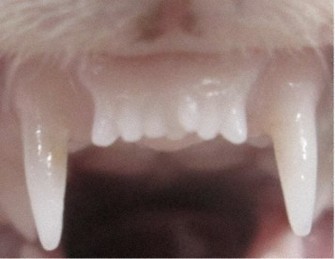
Initial animal trials of the medicine were highly successful with no notable side effects. It was found to promote the growth of ‘third generation’ teeth in mice, ferrets and dogs.
(Photo: Medical Research Institute Kitano Hospital)
The drug began human testing at Kyoto University Hospital from October 2024.
The human trials involve healthy adults with at least one missing tooth being injected with the medicine and observed. This will establish whether any negative health effects result from human use.
Once the safety of the drug is confirmed, researchers will test it on children aged two to seven with four or more missing teeth.
When will tooth regrowth medicine be available?
Following the clinical trials, the research team plans to have the medicine ready for general use in 2030. If successful, they believe the tooth regrowth medicine could be a ‘game changer’ for dentistry.
Dr Takahashi said: ‘The idea of growing new teeth is every dentist’s dream. I’ve been working on this since I was a graduate student. I was confident I’d be able to make it happen.’
The Osaka researchers were prompted by a desire to offer a solution for tooth loss that is permanent. While long-term replacements such as dental implants can be close to permanent, there are currently no treatments available which regenerate natural dentition.
Dr Takahashi said: ‘We want to do something to help those who are suffering from tooth loss or absence. While there has been no treatment to date providing a permanent cure, we feel that people’s expectations for tooth growth are high.’
Stem cells for tooth regrowth
Another method of tooth regrowth which has been researched in recent years is stem cell regeneration.
In October 2023, academics from Sharad Pawar Dental College and Hospital, India reviewed the existing research and concluded that whole tooth regeneration with stem cells was a ‘realistic aim’.
The study concluded that stem cells were particularly useful for bone regeneration and correction of bone abnormalities. This would be highly applicable to restorative dentistry cases to correct craniofacial bone damage from trauma.
Researchers also said that stem cell therapy could assist with regeneration of soft tissue within the mouth.
Can enamel grow back?
In August 2023, a research team succeeded in creating stem-cell based organoids that secrete the proteins which form dental enamel. Led by scientists from the University of Washington School of Dentistry, the researchers consider this breakthrough to be ‘critical first step’ in developing stem-cell-based treatments to repair damaged teeth.
The team said it hoped to use this research to create an enamel that is as durable as that found in natural teeth. The enamel could be created in laboratories and used to fill cavities or applied as a ‘living filling’ to grow into the cavity.
‘This may finally be the “century of living fillings” and human regenerative dentistry in general.’
Hannele Ruohola-Baker
Hannele Ruohola-Baker, a professor of biochemistry, headed the project. She said: ‘Many of the organs we would like to be able to replace, like human pancreas, kidney, and brain, are large and complex. Regenerating them safely from stem cells will take time.
‘Teeth on the other hand are much smaller and less complex. They’re perhaps the low-hanging fruit. It may take a while before we can regenerate them, but we can now see the steps we need to get there.
‘This may finally be the “century of living fillings” and human regenerative dentistry in general.’
Cellular self-organisation
In October 2025, a study explored whether the location of tooth growth cells in the mouth affects their development. To test this, cells taken from the lingual (tongue) side of mouse dentition were separated from those from the buccal (cheek) side and stimulated to grow.
Researchers found that cells on the lingual side developed into the tooth itself and its structure while those on the buccal side were more focused on stem cell activity, surrounding tissues and cellular repair.
Even when mixed up, the two types of cell reorganised themselves and began to form the right kind of tissue. This suggests that the cells automatically know when, where and how to grow tooth structures.
First author Eun-Jung Kim said: ‘We were curious to know if they could find their original place and reorganise when the fluorescently labelled lingual and buccal mesenchymal cells were mixed randomly, which they not only did, but the lingual cells grew into dentin to form the tooth as before. This phenomenon is called cellular self-organisation.’
Dr Jung said that these findings had ‘the potential to significantly impact our understanding of tooth development’. The researchers hoped they could lead to ‘advancements in stem cell-based tooth regeneration and more effective therapeutic applications for dental restoration and repair’.
Ethics of stem cell regeneration
While these trials have seemed promising, the potential for tooth regeneration through stem cells does raise some ethical concerns.
David Obree, Archie Duncan fellow in medical ethics at the University of Edinburgh, spoke to Dentistry.co.uk about the potential implications of tooth regrowrth. He described stem cell regeneration as ‘an exciting development which is likely to revolutionise dentistry and medicine in general’. However, he also named the source of stem cells used and their cost as potential ethical issues.
He said: ‘Much of the early research has been done using embryonic stem cells, that is tissues taken from embryos, either mammalian, or specifically human embryos, where there are obvious ethical issues, as there would be if other mammalian cells became implantable.’
‘Will this be an expensive treatment only available to the rich, or will the technology be cheap and available to everyone?’
David Obree
However, Dr Obree suggested that use of ‘autologous stem cells’, or those taken from patients themselves, would mitigate this concern. He added: ‘As well as obviating ethical concerns there is less chance of immunological rejection.
‘It may be that cells taken from extracted deciduous or wisdom teeth will be the pluripotent stem cells of choice, both for teeth and other organ renewal, and thus an interesting side-line for dentists harvesting the cellular material’
Another issue raised by Dr Obree is that of cost. He asks: ‘Will this be an expensive treatment only available to the rich, or will the technology be cheap and available to everyone?’
It is currently unclear how expensive stem cell treatments would be when available to the public and if offering them on the NHS would be possible.
Bioengineering
In February 2025, researchers from Tufts University used a bioengineering approach to create ‘replacement teeth’ from a hybrid of human and porcine cells.
The two cell types were combined inside a scaffold made from pig tooth, with the resulting structure being implanted into a miniature pig’s jaw. After two weeks, the implanted tissue was removed to reveal finished teeth which had developed hard layers of dentin and cementum.
Lead investigator Dr Pamela Yelick said: ‘We’re optimistic that one day we will be able to create a functional biological tooth substitute that can get into people who need tooth replacement.’
The study said that natural teeth are better able to withstand the force of chewing than dental implants. This is one advantage of bioengineered replacement teeth as opposed to implants made from synthetic materials.
The researchers also pointed out that the porcine hybrid teeth are not sourced from embryonic stem cells so are not subject to the same ethical concerns.
Lab-grown teeth
Researchers from King’s College London made a further breakthrough in tooth regrowth in April 2025. The team successfully created a suitable environment in which to regrow teeth, which they hope will be an alternative to fillings or implants in the future. These lab-grown teeth would be a stronger, more durable and more biologically compatible solution to missing teeth.
The researchers successfully introduced a material that enables cells to communicate, meaning one cell can tell another to differentiate into a tooth cell. This mimics the environment of natural tooth growth, allowing the researchers to recreate the process in a lab.
Xuechen Zhang is a PhD student from the faculty of dentistry, oral and craniofacial sciences at KCL. He said: ‘We developed this material in collaboration with Imperial College to replicate the environment around the cells in the body, known as the matrix. This meant that when we introduced the cultured cells, they were able to send signals to each other to start the tooth formation process.
‘Previous attempts had failed, as all the signals were sent in one go. This new material releases signals slowly over time, replicating what happens in the body.’
The next step for this research will be determining how the lab-grown teeth can be transferred into the mouth.
Zhang added: ‘We have different ideas to put the teeth inside the mouth. We could transplant the young tooth cells at the location of the missing tooth and let them grow inside mouth. Alternatively, we could create the whole tooth in the lab before placing it in the patient’s mouth.
‘For both options, we need to start the very early tooth development process in the lab.’
Mineral enamel repair
An alternative approach to tooth regrowth is mineral regeneration to repair damaged enamel.
In 2019, a gel was developed by mixing calcium and phosphate ions in an alcoholic solution with the organic compound trimethylamine. This solution successfully produced clusters of calcium phosphate, the main component of dental enamel.
When applied to damaged tooth samples, the gel was found to create a three-micrometre-thick layer of new enamel in 48 hours. According to the researchers, this repair ‘would be permanent’.
Zhaoming Liu co-authored the study with colleagues from the Zhejiang University School of Medicine. He said: ‘Our newly regenerated enamel has the same structure and similar mechanical properties as native enamel.
‘We hope to realise tooth enamel regrowth without using fillings which contain totally different materials.’
The materials used within the trial are cheap and can be prepared on a large scale.
Dr Liu continued: ‘After intensive discussion with dentists, we believe that this new method can be widely used in future.’
Will we ever be able to regrow teeth?
Results from studies have been positive about the potential for regenerating damaged teeth. Despite this, there are still significant barriers to whole tooth regrowth.
For example, the use of RNA to induce tooth regrowth has so far only been successful in patients who are born with missing teeth. While these patients are likely to be able to access the new medicine by 2030, this will not assist those who lose teeth later in life.
On the other hand, researchers said they were hopeful that further investigation could broaden the application of the medication to those who have lost teeth due to gum disease or injury. Lead researcher Katsu Takahashi said: ‘I would be over the moon if that happens.’
Stem cell regeneration also raises some concerns including the ethics of using embryonic stem cells and the potential for immunological rejection.
However, transplant rejection was found to be uncommon across several studies when adult stem cells taken from organs such as tooth pulp or umbilical cords were used. The 2023 review concluded that oral and facial treatment was possible with adult stem cells from many different organs.
Overall while studies have shown positive results for potential methods of tooth regeneration, there is no clear timeline for if and when it will be possible to regrow whole teeth.
Follow Dentistry.co.uk on Instagram to keep up with all the latest dental news and trends.
Stay updated with relevant information about this webinar