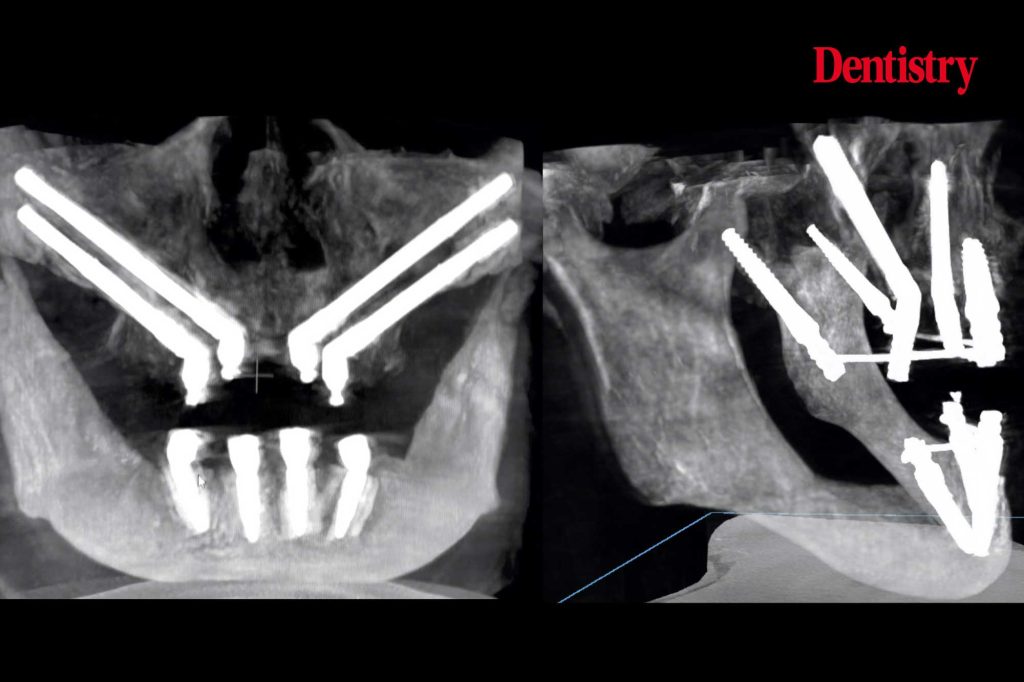
Vladimir Garcia Lozada explores the use of zygomatic implants, an efficient and predictable therapeutic option for rehabilitation of patients with severe maxillary bone resorptions.
The use of zygomatic implants for the rehabilitation of the atrophic maxilla using the Bränemark protocol was first developed in 1998. The journey in the more than 20 years since has seen a huge number of advancements.
These implants have proven to be an efficient and predictable therapeutic option for rehabilitation of patients with severe maxillary bone resorptions, demonstrating high success rates according to various studies.
They offer multiple advantages for patients suffering maxillary atrophy, enabling rehabilitation while reducing treatment time and morbidity associated with extensive or large reconstructive bone grafts procedures, restoring function and aesthetics, and marked improvement in quality of life.
This treatment modality has undergone various surgical approaches, refined to enhance protocol efficiency and prevent complications, thereby optimising success rates. Critical anatomical, biological, biomechanical, and biofunctional factors inherent to this procedure are carefully considered (Garcia-Lozada, 2023).
Zygomatic implants: techniques and approaches
In the late 1990s, the classic Bränemark zygomatic implant technique involved a single implant placement in each zygomatic bone (one bilaterally) positioned very palatally, and splinted alongside to two to four conventional implants in the premaxilla (anterior region).
In 2003, Bothur and Balshi published articles on the ‘use of multiple zygomatic implants’ for patients without adequate anterior and posterior maxillary bone, paving the way for research and development of…
Sign in to continue reading
Free access to our premium content:
- Clinical content
- In-depth analysis
- Features, reports, videos and more
By joining, you’re helping to support independent, quality journalism that keeps dental professionals informed and empowered – and allowing us to keep delivering the insights you value most.