

Dentistry
Dentistry’s guide to electric toothbrushes
Last updated: 8th August 2025
Contents
Electric toothbrushes are now more popular than manual toothbrushes.
A survey by the Office for Health Improvement and Disparities found that most of the UK population now uses electric toothbrushes. Some 59% of respondents said they use an electric toothbrush while 51% use a manual toothbrush (and some use both).
Of course, not all powered toothbrushes are created equal. The price alone can vary from several pounds for a very basic model to hundreds for the most advanced.
Then, there is the question of the type of electric toothbrush you wish to recommend. Leading brands use both sonic and/or oscillating-rotating brushes, for example. Some dentists will swear by one or the other, but it often comes down to personal preference.
This guide aims to help you choose the brush that you will be confident to recommend and sell in your practice. It will set out the types of electric toothbrushes and suggest some of the leading manufacturers and models.
Types of electric toothbrushes
There are two main types of electric toothbrushes: oscillating-rotating and sonic.
- Oscillating-rotating toothbrushes: these have a brush head that spins around or oscillates. Oscillating toothbrushes can be slightly more expensive, due to the parts involved
- Sonic toothbrushes: these use high-frequency vibrations to clean your teeth. Sonic brushes can be noisier than the alternatives.
Other types of electric toothbrush include:
- Rotating: these are often the cheapest on the market. The brush, or sections of it, turn in a circular motion
- Pulsing: these are toothbrushes that have rotating or oscillating-rotating heads and also use pulses. The pulses make the brush head move backwards and forwards. These are designed to remove more plaque from the teeth. Pulsing is a feature usually found on the more expensive rotating and oscillating-rotating toothbrushes
- Counter-oscillating: these are similar to oscillating toothbrushes, but different parts of the brush move in opposite directions simultaneously
- Dual head: dual head electric toothbrushes use two heads. One head rotates while another brushes from side to side.
Electric toothbrush features
There are a range of features available for electric toothbrushes, depending on the model. Here are some of the most common:
Electric toothbrush speed
Oscillating-rotating electric toothbrushes will have around 1,300 to 8,800 brush strokes per minute (BPM). Sonic toothbrushes are usually 24,000 to 30,000+ BPM. The higher the BPM, the more effective the brush will be at removing plaque.
Brushing modes
Some electric toothbrushes have different brushing modes, for example ‘polish’ or ‘whitening’. This relates to the speed of the brush.
Pressure sensors
Pressure sensors or scrubbing sensors tell the user if they are brushing too hard. This prevents damage to teeth and gums. Brushing too hard can harm teeth and gums.
Built-in timer
Some electric toothbrushes have built-in timers, which tell you when you have brushed for long enough. Two minutes is generally recommended for brushing, and the brush gives you an alert when it reaches that mark.
Some also give you alerts at regular time periods, for example at 20 or 30 second intervals. This allows you to know how long you have spent brushing each part of your mouth.
Electric toothbrush heads
Choosing a toothbrush head is based on the level of bristle hardness. People with sensitive teeth may find a soft-bristled brush more comfortable to use. Experts recommend changing your electric toothbrush head every two to six months. Some brushes will now remind you to do so when the time is right.
Battery life indicator
Most modern electric toothbrushes will last two to three weeks on a single charge. Some brushes will show you how much battery power remains. This allows you to charge your battery when you most need it. This is helpful because recharging batteries too early can reduce their lifespan.
Bluetooth/apps
Modern electric toothbrushes may even be able to connect to other devices. Apps can give you feedback about your brush. Factors may include how long you have been brushing, areas that need to be brushed, pressure and more.
This information can be shown live while you brush or referred to later. They can also give you tips and advice on your brushing technique. Apps can also be used to change your electric toothbrush settings.
Accessories
Electric toothbrushes often come with accessories. These can include things like travel cases and charging stands.
Water resistance
Some electric toothbrushes are fully waterproof. This is a useful feature to consider if the user likes to brush in the shower.
Electric toothbrush chargers
Most of today’s electric toothbrushes are rechargeable, with built-in batteries. Some of these charge by induction, through placing them in a cradle. Others charge by connecting them to a power source using a USB cable. Some of the more inexpensive models still use replaceable batteries.
How to use electric toothbrushes
Using an electric toothbrush is different to using its manual equivalent. Here is some advice on how to use them.
- Work at an angle: positioning the brush at 45 degrees where teeth meet the gum is most effective.
- Brush all areas: methodically work your way around the teeth, ensuring each one has been brushed
- Use circular movements: use gentle, circular movements to clean every area of the mouth.
- Head replacements: the electric toothbrush heads should be changed every two to six months, depending on the model
- Brushing time: as with all toothbrushes, it is recommended to brush for two minutes. Many electric toothbrushes now use timers to alert users when it is time to stop.
Are electric toothbrushes better than manual?
Much research suggests that electric toothbrushes are more effective than manually brushing your teeth. One study found a significant benefit in using oscillating-rotating brushes over manual for young children.
It is worth noting, however, that the NHS still advises that there is little difference between electric and manual brushes.
Some studies show that electric toothbrushes are more effective at removing plaque than manual toothbrushes.
The powerful waves created while brushing teeth can create bubbles in the water. These loosen plaque and bacteria.
Electric toothbrushes can also improve technique. Many people find them easier to use, especially those with limited movement.
Buying guide
Philips Sonicare

Philips is a leading health technology company dedicated to enhancing people’s health and wellbeing. With a century of healthcare expertise, Philips focuses on improving outcomes across the health continuum – from healthy living and prevention to diagnosis, treatment and home care. Its innovative solutions in oral care help patients live their healthiest lives and shine on.
Philips offers a comprehensive oral healthcare solution, ensuring superior results every time. Its Sonicare products provide clinically superior teeth cleaning, while its cordless power flosser allows for professional-level flossing at home. Additionally, it offers a full range of safe and easy whitening solutions suitable for any patient.
Mission
Philips’ mission is to improve people’s health and well-being through meaningful innovation. By 2030, it aims to positively impact 2.5 billion lives per year. It strives to be the best workplace for those who share our passion, fostering personal development, inclusion and diversity. Together, it will deliver superior, long-term value to all stakeholders, acting responsibly towards our planet and society in partnership with our stakeholders.
Vision
Philips’ vision is to provide better care for more people. It aims to give care providers more time to focus on patients while making it easier for individuals to take care of their health and wellbeing through meaningful innovation. It is committed to doing this responsibly and sustainably, with patient safety and quality at the core of everything it does.
About Philips Sonicare
All Sonicare toothbrushes harness sophisticated sonic technology to generate high-speed vibrations in the brush head. These help to remove plaque and improve gum health.
Sonicare toothbrushes are particularly effective at removing plaque, reducing gingivitis and improving oral health compared with traditional manual toothbrushes. This is due to a combination of vibrational speed, brush amplitude, fluid dynamic action and precision design.
Sonicare brushes work in several unique ways:
High-frequency vibrations
Superior Sonicare technology generates 62,000 bristle movements per minute. These brush movements are critical in effectively removing plaque from tooth surfaces. They generate the equivalent results of a whole month’s worth of manual brushing in just two minutes.
Amplitude
The high-frequency vibrations are combined with high amplitude movement of the brush head. This is the large distance the bristles move during each sweep.
High amplitude movement allows for the removal of more plaque in hard-to-reach areas, such as between teeth and along the gumline.
The energetic, sweeping action of high-amplitude movement can also help remove surface stains on teeth. This can restore a natural whiteness over time.
Fluid dynamic action
The combination of frequency and amplitude generates the toothbrush’s unique fluid dynamic cleaning action. Gentle microbubbles are created in the toothpaste and saliva mixture, which are then pulsed between the teeth and along the gumline. This gives an enhanced brushing experience
This fluid dynamic action helps clean and dislodge debris from between the teeth and along the gumline. It disrupts biofilm and reduces plaque build-up in areas where traditional bristles can’t reach effectively, significantly improving gum health.
Gentle yet effective on gums
Sonicare brushes are designed to be safe on the gingiva. The sonic motion is gentle enough not to irritate the gums but effective at removing plaque, especially with consistent use
All Sonicare models come with pressure sensors to alert you if you’re applying too much pressure. This helps reduce gum inflammation and wear on tooth surfaces.
Timer and pressure sensors for optimal brushing
All Sonicare toothbrushes have built-in timers to ensure the recommended two-minute brushing duration. Sextant and quad pacers divide the brushing time uniformly around the mouth
Pressure sensors notify you if you’re pressing too hard, which helps to avoid excessive wear on the teeth and gums.
Personalised modes and intensity levels
Many Sonicare models offer multiple brushing modes (including clean, sensitive, gum care, and whitening). They also have adjustable intensity settings, so users can customise their brushing experience based on specific oral health needs.
Philips Sonicare has a portfolio of brushes that are clinically proven and tested to consistently ensure the most effective yet gentle clean.
Sonicare models
Philips Sonicare 5000-7000 Series
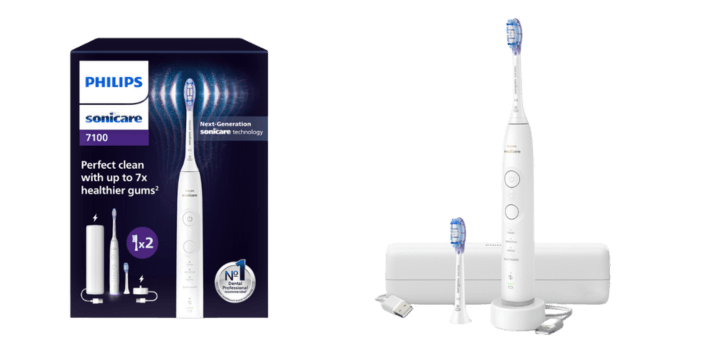
Philips’ most innovative Sonicare toothbrush features new adaptive brushing technology, 62,000 gentle sonic movements per minute and patented optical sensing capability.
Studies show that the brush can achieve up to 20 times more biofilm removal and up to 30 times more plaque removal in hard-to-reach areas compared with a manual toothbrush.
The new Philips Sonicare 5000-7000 Series represents the next generation of sonic technology. Each of the three brushes in the range features new adaptive brushing technology, ensuring an optimal brushing experience regardless of a patient’s technique.
Precision feedback
This is achieved because Philips Research and Development has developed a new drivetrain. This automatically adjusts brushing around the posterior teeth. Here, brushing performance can be compromised due to interference with the buccal mucosa. The new brush offers precision feedback when there is resistance to the head, regulating movement to ensure an optimal performance.
This intuitive feature is coupled with dynamic optimal sensors. Thanks to the new internal mechanical structure of the drivetrain’s resonator system, the brush can ‘regulate’ amplitude when pressure is applied on the brush head. This self-regulation minimises any brush movements.
Optical pressure-sensing technology
The three brushes in the new range have patented optical pressure-sensing technology. This improves pressure sensing capability, accurately measuring applied brushing force. The brush captures immediate measurements, lighting up and vibrating. This lets patients know that they need to adjust their brushing technique. The pressure sensing technology assesses light reflection, with less light indicating more force.
A sustainable choice
Sustainability remains a key focus for Philips, and the toothbrushes are designed to brush with you for years to come. The 5000-7000 series have been created using innovative laser welding, giving them additional strength and durability to ensure they last longer. The handles can be disassembled for repair, and batteries can be replaced.
The brushes are also more energy efficient, with the new high-performance battery lasting 21 days. Packaging is paper based and fully recyclable, while all Philips brushheads contain 70% bio-based plastic. Meanwhile, the brushes have been tested for their durability and reliability using a rigorous process that involves a 30-day run time.
Philips’ quietest brush
The new Sonicare brush is also Philips quietest yet. The Research and Development team counterbalanced the spring motion inside the drivetrain to reduce the vibration and noise, helping create a more pleasant brushing experience.
All handles in the next generation range offer unwavering performance. The 6500 and 7100 models connect to the Sonicare App, which contains a timer feature, visual progress tracker and personalised brushing trend dashboard. The 5300 Sonicare toothbrush offers superior plaque removal and whiter teeth. The 6500 brush has three modes and intensities. It is suitable for patients with sensitive teeth and gums. The brush provides up to 200% better gum health in two weeks.
Meanwhile, the top of the range 7100 toothbrush has four modes, offering more options for patients. It removes ten times more plaque compared with a manual toothbrush.
Find out more about the Sonicare 5000-7000 Series on the Philips website.
Other Sonicare brushes
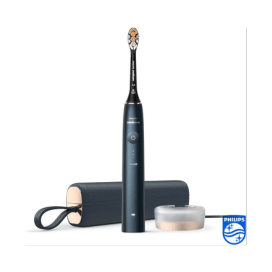
The Sonicare 9900 Prestige is the most advanced Prestige sonic toothbrush in the Sonicare portfolio. It uses artificial intelligence (AI) technology to sense your brushing style and adapts to you as you clean. One seamless button starts your journey to 20 times more plaque removal and up to seven times healthier gums in just two weeks compared to a manual brush.
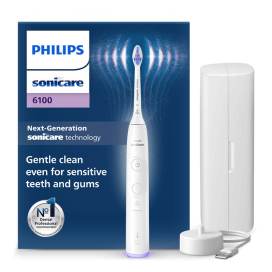
The Philips Sonicare Series 6100 is gentle on gums, tough on plaque — removes up to 10x more than a manual brush. With 2 modes, 3 intensities, and a visual pressure sensor that lights purple when brushing too hard. Enjoy a smoother clean with less vibration, and go longer between charges with a 3-week battery life.
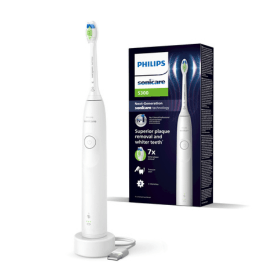
The Philips Sonicare Series 5300 removes up to 7x more plaque than a manual toothbrush for a brighter, healthier smile. With 2 intensities, a built-in pressure alert that reduces vibration and pulsing sound, plus a 3-week battery life, it delivers a personalised clean that protects your gums.
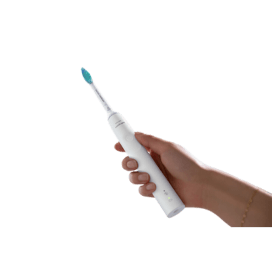
The Sonicare 3100 is designed to easily transition from a manual to a powered toothbrush. The 3100 entry-level sonic toothbrush offers effective cleaning performance at an accessible price point. With 31,000 brush movements per minute, it boasts three times better plaque removal than a manual brush.
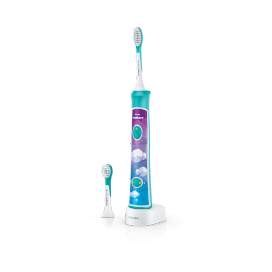
The Philips Sonicare for Kids Bluetooth-enabled toothbrush interacts with a fun app that helps kids brush better and for longer. Kids have fun while learning techniques that will last a lifetime.
Customise your experience
Philips Sonicare brushes feature several intensity settings and a variety of brush heads, allowing patients to customise their experience.
Philips’ newest brush head is the premium All-In-One, designed to brush away plaque, remove stains and care for gums. The angled bristles help to remove up to 20 times more plaque than a manual toothbrush. They also provide flex to compensate for any excess pressure.
Triangular tips can remove up to 100 percent more stains in less than two days compared to manual. Its longer bristles provide a deep clean for gums that are up to 15 times healthier than a manual brush over six weeks.
This is Philips’ all-time best brush, with its best clinical results ever.
Clinical trials
There have been many clinical trials for Philips Sonicare brushes over their 30-year history.
A recent in-vivo study compared twice-daily home use of the Philips Sonicare Diamondclean Smart using a Premium Gum Care brush head with a manual brush. It found that the Philips was significantly more effective in reducing plaque and symptoms of periodontal inflammation, including bleeding and pocket depth.
A separate in-vivo study took place on a population of subjects with moderate gingivitis. It compared use of the Philips Sonicare 9900 Prestige power toothbrush and A3 Premium All-in-One brush head with manual brushing. It found statistically significant reductions in surface plaque, gingival bleeding and gingival inflammation following two and six weeks of use.
Lastly, a third in-vivo study took place into interdental cleaning regimens. This used a manual toothbrush and the Philips Sonicare Cordless Power Flosser in the clean mode with high intensity along with the QuadStream nozzle. It compared this to a manual toothbrush alone, a manual toothbrush used with an interdental brush and a manual toothbrush used with string floss. It showed a statistically superior reduction in gingival inflammation, gingival bleeding and surface plaque following two- and six-week periods of twice-daily home use.
Get to know more about which Philips Sonicare brush is right for you and your patients.
Oral-B
Oral-B is a leading brand of oral hygiene products. These include electric toothbrushes, toothpastes, mouthwashes and dental floss.
In 1949, the first manual toothbrush was designed in the United States by a dentist who sold it under the name ‘Oral-B’.
In 2005, Oral-B became part of Procter & Gamble. Its electric toothbrushes and all other Oral B products are produced and distributed internationally. They serve users of all ages and needs.
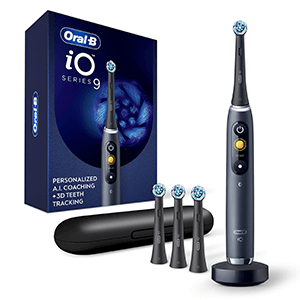
Oral-B’s most technologically advanced range of electric toothbrushes are those in the IO series. Oral-B IO toothbrushes can be tailored to your individual needs and preferences. They also encourage improved oral health through the use of artificial intelligence (AI) to guide brushing routines.
The IO range brings together the unique, dentist-inspired Oral-B round brush heads with the power of gentle micro vibrations.
They come with up to seven cleaning modes to ensure comfort and effectiveness to all users.
The IO brushes use a unique magnetic drive system, which focuses energy on the bristle tips. This ensures an effective, deep clean every time.
They also feature AI-powered 3D tooth tracking. This monitors your brushing routine and highlights areas you may have missed.
Each Orab-B IO model features multiple brushing modes. This ranges from four modes with the IO4 to seven with the IO9 and IO10. These include daily clean, sensitive, gum care, intense clean, whitening, super sensitive and tongue cleaner.
To help use the toothbrush effectively, they also come with 360-degree gum pressure sensors. This ensures users brush with enough force to remove plaque but not enough to damage gums and enamel.
The IO7 onwards use magnetic fast-charging stations, which recharge your brush in three hours. Other models are best charged overnight.
- Up to 48,000 movements per minute
- Battery life: Around two weeks
- Recharge time: from three hours
- Magnetic fast-charging station (IO7-IO10)
- Multiple brushing modes: IO4 – four; IO5-7 – five; IO9-10 – seven
- Choice of colours: IO10 – 2; IO9-IO8 – 3; IO7 – 2; IO6-IO5 – 3; IO4 – 2; IO3 – 3
- 3D tooth tracking
- Pressure sensor
- Interactive display
- Travel case (extra)
- Waterproof.
Ordo

Ordo was formed based on the belief that brighter smiles don’t need to be costly for users or the planet. It designs toothbrushes and other accessories based on sustainable principles. Ordo also aims to keep its prices affordable for everyone.
Ordo electric toothbrushes are designed to offer value for customers and sustainability for the planet.
With stylish designs, the Ordo models aim to brighten up your smile along with your bathroom.
The Ordo Sonic+ and Sonic Lite models were designed and approved by dentists. They are durable and stylishly designed, while offering deep and bespoke cleaning experiences.
They also come with a 60-day money-back guarantee and two-year warranty.
Ordo Sonic+ electric toothbrush
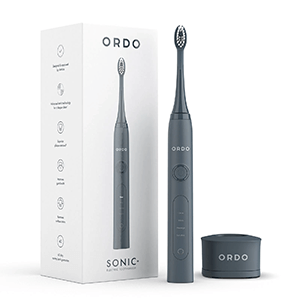
The Ordo Sonic+ offers 40,000 sonic pulses per minute and four brushing modes.
Its battery lasts for more than four weeks on a single charge. It comes complete with a USB induction charging base.
The Sonic+ features a two-minute timer and quad pacer to aid effective brushing. It also features four brushing modes: clean, white, massage and sensitive.
The Ordo Sonic+ toothbrush is available in six colours: arctic blue, charcoal grey, mint green, pearl violet, rose gold and white silver.
It is also waterproof and comes with a protective travel cap.
Ordo Lite electric toothbrush
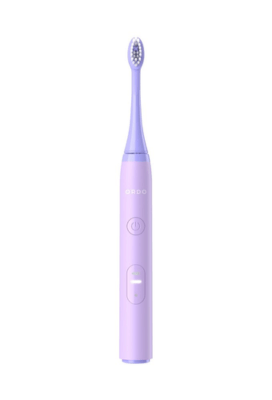
The Ordo Light toothbrush offers many of the benefits of Sonic+ but at a reduced cost.
It promises 35,000 sonic pulses per minute and two brushing modes.
The Ordo Lite can last for five weeks between charges, charged via USB-C.
It features two brushing modes: clean and sensitive.
The Ordo Lite toothbrush also comes in six colours: lavender, petal, stone, snow, sage and ocean.
Ordo Sonic electric toothbrush key features:
- Up to 40,000 sonic pulses per minute (Sonic Lite: 35,000)
- Battery life: four weeks (Sonic Lite: five weeks)
- Recharge time: four hours
- Four brushing modes (Sonic Lite: two)
- USB induction charging base (Sonic Lite: USB-C charging)
- Choice of six colours
- Sixty-day money-back guarantee
- Two-year warranty
- Two-minute and quad timer
- Travel cap
- Waterproof
Suri

Suri promises to take electric toothbrushes back to first principles. Its products aim to shun wasteful packaging and unrecyclable components while focusing on an effective brush.
Suri is a B-Corp. It has also partnered with Climatepartner, to offset 100% of its brushes’ emissions, including their manufacture and transportation.
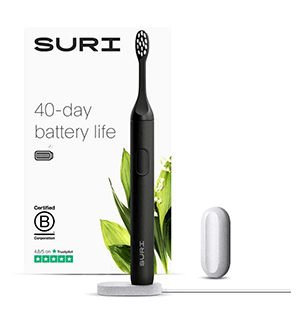
Suri’s bid to re-think electric toothbrushes began with re-thinking the materials used to make them. A key focus is on avoiding petroleum-based plastics.
Suri’s brush heads are made with corn starch and the bristles with castor oil. They can even be recycled for free in the UK and US. The toothbrush body is made from aluminium, making it long-lasting and recyclable.
They are also powerful, with 33,000 sonic vibrations per minute.
They feature more than 40 days of battery life between charges. Suri toothbrushes can be recharged using a USB pebble charger.
They can be attached to tiles, mirrors and more between uses, keeping your bathroom tidy.
Suri electric toothbrushes come in five colours: winter fern, morning waves, midnight black, sea mist and sunset bloom.
A UV travel case is available as an optional extra. This cleans brushes on the go, killing up to 99.99% of bacteria.
Suri promises a better clean in every way.
- Sonic vibrations: 33,000 per minute
- Battery life: 40 days
- Recharge time: four hours
- Charging: USB pebble charger
- Two brushing modes
- Choice of five colours
- 100-day money-back guarantee
- UV travel case (extra).
Conclusion
This guide has suggested a range of electric toothbrushes that might suit your patients. It has also given a refresher on some of the features they might be looking for in a brush.
As all dentists know, oral care extends beyond the surgery. Encouraging patients to look after their teeth and gums between appointments is paramount.
Part of this self-care is ensuring that patients are brushing their teeth effectively. Many will find it easier and more effective to use an electric toothbrush to do this.
Stay updated with relevant information about this webinar