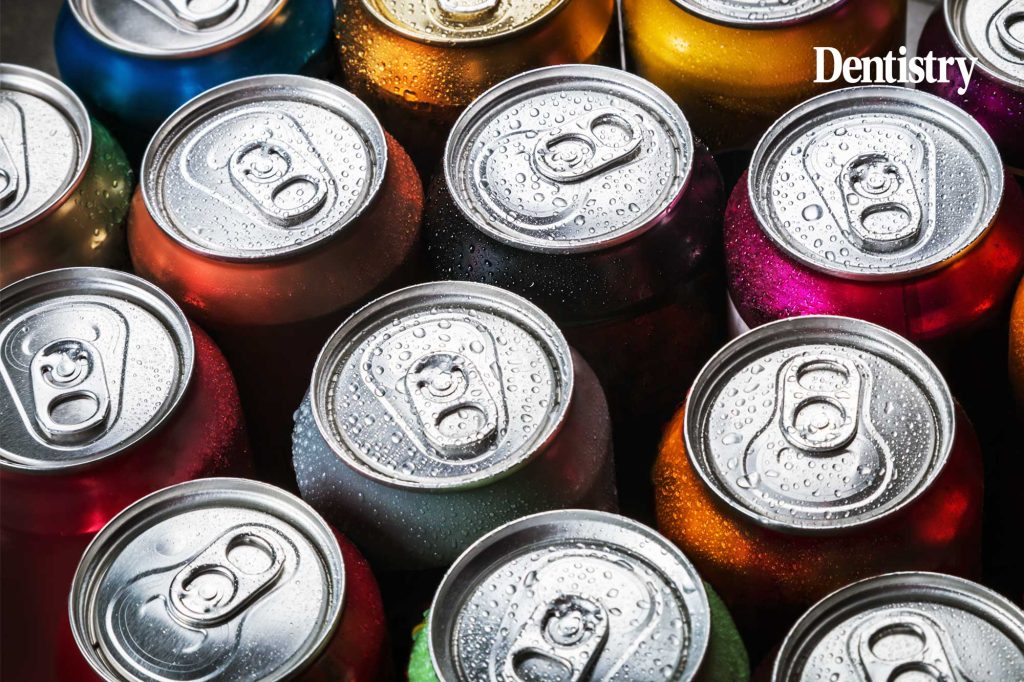
Dental experts have applauded the government’s proposal to ban energy drinks for under 16s, pointing to ‘real scope for gains in oral health’.
The Department of Health and Social Care (DHSC) has announced proposals to ban the sale of high-caffeine (>150mg) energy drinks to children under 16. This includes online and in shops, restaurants, cafes and vending machines. The proposals would not affect lower-caffeine soft drinks or tea and coffee.
Part of its Plan for Change, the government said this proposal is based on evidence of the drinks’ negative impacts on physical and mental health, sleep quality, and educational outcomes. It suggested the ban could ‘prevent obesity in up to 40,000 children and deliver health benefits worth tens of millions of pounds’.
Launched today (2 September), a consultation on the proposal will run for 12 weeks to gather opinions from health experts, educators, retailers, manufacturers, local authorities and the public.
‘The equivalent of a double espresso’
Health and social care secretary Wes Streeting said: ‘How can we expect children to do well at school if they have the equivalent of a double espresso in their system on a daily basis? Energy drinks might seem harmless, but the sleep, concentration and wellbeing of today’s kids are all being impacted, while high sugar versions damage their teeth and contribute to obesity.
‘As part of our Plan for Change and shift from treatment to prevention, we’re acting on the concerns of parents and teachers and tackling the root causes of poor health and educational attainment head on. By preventing shops from selling these drinks to kids, we’re helping build the foundations for healthier and happier generations to come.’
DHSC figures show that 100,000 children consume at least one high-caffeine energy drink every day. One third of children aged 13 to 16 years and nearly a quarter of children aged 11 to 12 years consume one or more of these drinks each week.
Energy drinks have ‘no place on the menu for children’
The British Dental Association (BDA) said the ban could have a significant positive impact on children’s oral health. This is because energy drinks are often high in sugar, with even sugar-free versions typically highly acidic.
BDA chair Eddie Crouch said: ‘Products that are habit forming, highly acidic and can contain over 20 teaspoons of sugar have no place on the menu for children. Our kids are growing up in a toxic food environment, and this boldness needs to be applied across the piece.’
The association said the government needed to go ‘further and faster to tackle the catastrophic impact of unhealthy food and drink on children’s health’. For example, through stricter manufacturing guidelines and expansion of the sugar levy.
Nyree Whitley, chief clinical officer at Mydentist, said: ‘Most people are aware of the links between sugary drinks and tooth decay, but few realise that sugar-free fizzy drinks come with their own dental risks too. In any food or drink it’s not just sugar content people need to be aware of – they also need to watch out for acidity levels too.
‘Food and drinks with high acidity increase the chances of tooth erosion, stripping away tooth enamel and exposing the soft and sensitive inside of the tooth. Tooth erosion leads to increased sensitivity, discolouration, and weakness which can result in teeth being more prone to cracks and chips. And it can’t be reversed – once a tooth loses its enamel it’s gone forever.
‘Because energy drinks contain high levels of caffeine, you may also experience a dry mouth – this is because saliva naturally helps to neutralise acids and protect your teeth, but caffeine can impact your saliva production. Over time, this could cause cavities and other oral health issues. Similarly, if you experience tooth grinding, you may find that caffeine triggers it and this could cause tooth damage.’
Follow Dentistry.co.uk on Instagram to keep up with all the latest dental news and trends.