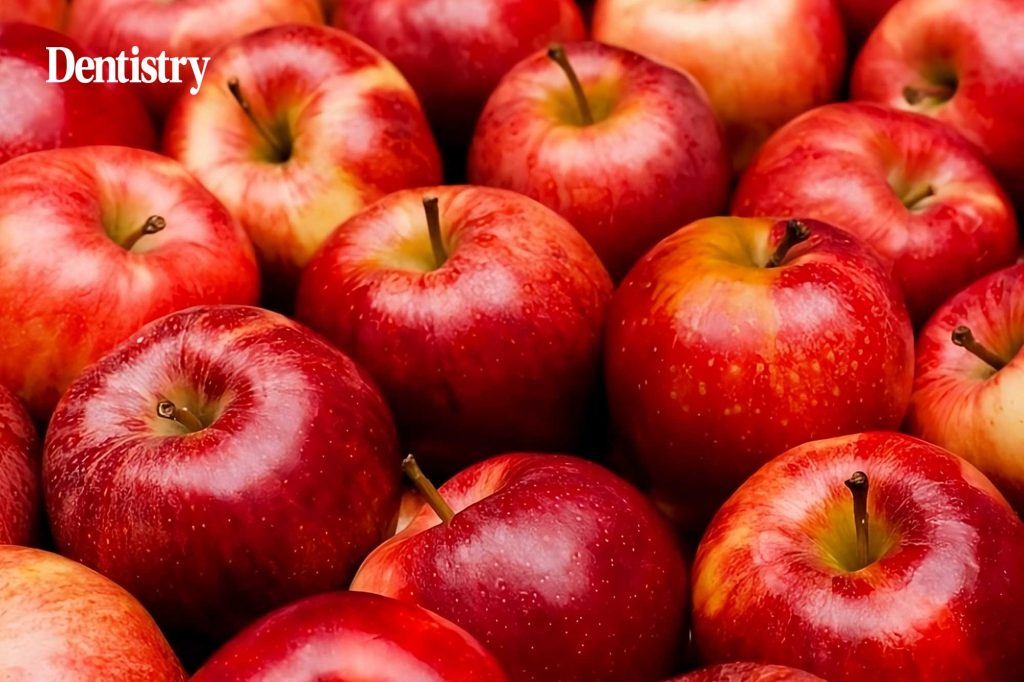
A plant-derived compound found in apple peel has been proposed as an ‘alternative to antibiotics’ by a new study, which found it effective against periodontal disease.
Morin is a natural extract found in guava leaves, apple and fig peels, certain teas and almonds. Researchers from São Paulo State University found that it showed antimicrobial, anti-inflammatory, and antioxidant effects when tested against bacteria that cause periodontal disease.
The morin was trialled against a multi-species bacterial biofilm designed to replicate the effect of disease on patients’ gums. It was applied in a powder form, obtained through a similar drying process as is used to create powdered milk.
Study author Luciana Solera Sales said: ‘We started developing these systems in the form of tablets, films, and microparticles. But until then, they were too large and unfeasible for oral use. In my PhD, we tried to improve these products by making them smaller.
‘That’s why I developed this format, which looks like powdered milk. I prepared a solution containing sodium alginate and gellan gum to encapsulate morin in a controlled-release system, which is already widely used for drugs but isn’t yet widely used in dentistry.’
What are the advantages of using an apple extract against periodontal disease?
Supervisor Fernanda Lourenção Brighenti said the powder could be used to make ‘various types of oral hygiene products’. She continued: ‘The idea is to provide a platform that acts as an adjunct and can be useful, for example, for people with reduced motor skills who are unable to brush their teeth properly, such as older adults and patients with special needs.’
Morin was chosen for the study because its presence in fruits such as apples make it cheap, natural and easily accessible.
Sales said: ‘Morin is a flavonoid that can be obtained from various fruits. But simply eating it isn’t enough; the substance needs to be processed.
‘The idea is to take advantage of this natural compound, its benefits and its advantages, and transform it all so that it can be used to prevent and treat tooth decay and periodontal disease.’
The researchers intend to continue testing in animal models, before continuing to clinical trials. Further elements to investigate include a potential for reduced tooth staining and whether the treatment adequately maintains the oral microbiome.
Follow Dentistry on Instagram to keep up with all the latest dental news and trends.