
Dentistry
Dentistry’s guide to AI in dentistry
Last updated: 2nd December 2025

Contents
AI in dentistry is being used ever more frequently by dental practitioners. That should come as little surprise; AI is increasingly used in many aspects of our lives.
AI stands for artificial intelligence. Older forms of AI involved a stimulus being processed by a set series of rules, which would generate a response. The first AI tools were used in healthcare back in the 1950s. These were employed to analyse blood and urine samples. By the 1980s, AI was being used in medical image analysis.
However, today’s AI systems learn for themselves using large data sets. This is known as machine learning.
One 2023 study found that more than a third of dentists have implemented AI in their dental practices. And 77% of them reported positive results after applying it.
Evidence suggests that patients appreciate the benefits of using AI in dentistry to reduce medical bias and improve accuracy.
This guide will examine how AI, in its various forms, can be used in modern dentistry.
Uses of AI in dentistry
AI has an increasingly prominent role across many aspects of dentistry. It can be used clinically, for example, to aid diagnoses. It can also be used to help with practices’ day-to-day business operations. Here are some of the main ways in which AI is reshaping dentistry.
Image analysis
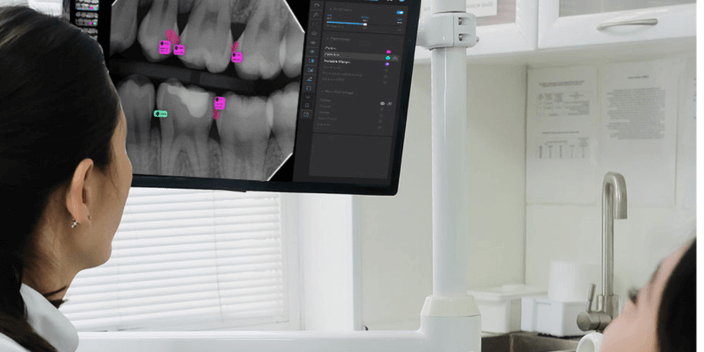
This is the most prominent way in which AI is currently utilised in dentistry. AI image analysis uses images such as 2D radiographs and CBCT, MRI and intraoral scans. It draws upon large datasets to predict anomalies, which the dentist can then investigate.
AI image analysis can therefore increase confidence in diagnosis and play a role in developing patient treatment plans. It can be used in different ways, including:
- Caries diagnosis: AI tools can be used to analyse X-rays to help dentists identify areas that require further examination
- Periodontal diagnosis: AI can help to measure bone levels and detect tartar
- Endodontic diagnosis: AI can be used to help identify periapical pathologies. This technology analyses high-resolution 3D images of the periapical region
- Surgical planning: AI can be used with CBCT images to assist in the planning of surgeries. It can identify anatomical landmarks and pathologies. This can be used to increase surgical accuracy and efficiency. It can also improve communications between clinicians and dentists, who can use visual aids when explaining surgical processes.
Other examples of AI in dentistry
Practice management
AI can be used to automate or simplify administrative tasks, such as scheduling, billing, record-keeping, communications and sending reminders to patients. This can streamline practice management.
Clinical documentation
There are various ways in which AI can be used to assist with clinical documentation. For example, AI speech recognition software can be used for electronic health records. Technologies like conversational workflow assistants and documentation companions offer secure and convenient support for maintaining clinical documentation.
- Data management: AI can be used to aid clinical decision-making through the rapid interpretation of large datasets. This can range in scale from data from a small independent practice to global datasets. This has great potential in terms of coordination and collaboration between medical and dental practices, for example
- Personalised medicine: AI can be used to inform personalised patient treatment plans based on medical history and genetic makeup
- Predictive analysis: AI can help to predict diseases and patient outcomes using large datasets. These can include medical records and genetic information
- Drug discovery: AI can be used to help predict the potential efficacy of drugs and speed up the drug discovery process
- Clinical decision-making: AI can provide dentists with recommendations based on the latest clinical evidence and guidelines.
Ethical considerations of AI in dentistry
AI tools often carry with them a variety of ethical concerns, and those for use in dentistry are no different.
The most important issue relates to patient welfare. While AI can be used to assist with diagnoses, only an appropriate dental clinician can diagnose or decide on treatment. AI is one of many tools clinicians can use to inform their decisions, but it cannot make diagnoses itself.
Cybersecurity is also vital when using AI. A key concern is how patient data will be collected and shared. Privacy and confidentiality must be maintained.
Of course, it is also vital that regulations are followed. As technological advances continue at speed, it is important to follow updates to guidelines.
Hello Pearl AI

Hello Pearl is leading the global dental AI revolution with ground-breaking computer vision solutions that elevate efficiency, accuracy and care. Its Second Opinion platform is a highly advanced and comprehensive real-time chairside AI software. It is designed to help dentists detect many common pathologies and other conditions in patient X-rays.
What is Hello Pearl AI?
Hello Pearl was founded on the idea that AI could be used by dental practitioners as an always-on assistant.
The technology brings transparency and objectivity to dentistry. It does this by applying AI and computer vision to read patient X-rays with expert skill and speed.
Hello Pearl’s AI software includes Second Opinion. This is designed to improve the efficiency, consistency and accuracy of X-ray evaluations.
History of Hello Pearl AI
Hello Pearl AI was formed through a partnership between founders Ophir Tanz, Cambron Carter and Dr Kyle Stanley, a dentist. Both Tanz and Stanley also came from dental families.
The trio wanted to apply AI innovations in the realm of healthcare, and in 2019 Hello Pearl was born.
If you’re not taking steps forward, you’re definitely being left behind. Hello Pearl’s AI is an absolute game changer with endless possibilities. Easy to learn and even easier to incorporate into daily practice. It allowed you to have an informative and visual discussion with your patients. Patient engagement has vastly increased. Glad to be in the vanguard of the new wave in Dentistry.
Dr Amanda Bassey-Duke
What makes Hello Pearl AI unique?
Backed by unrivalled technological expertise and enterprise-level support, Hello Pearl’s solutions set the highest bar for dental AI.
- Leading capabilities: Hello Pearl’s computer vision systems identify and evaluate the widest range of pathologic and restorative features detectable in radiographic and 3D dental imagery
- Superior data: AI is only as good as its training. Hello Pearl’s machine learning models are trained on the world’s largest collection of expertly annotated and curated radiographs
- Proven experience: addressing customer needs is vital to the success of any AI solution. Hello Pearl’s team has commercialised AI for clients, including many on the Fortune 100, for more than 10 years.
Second Opinion
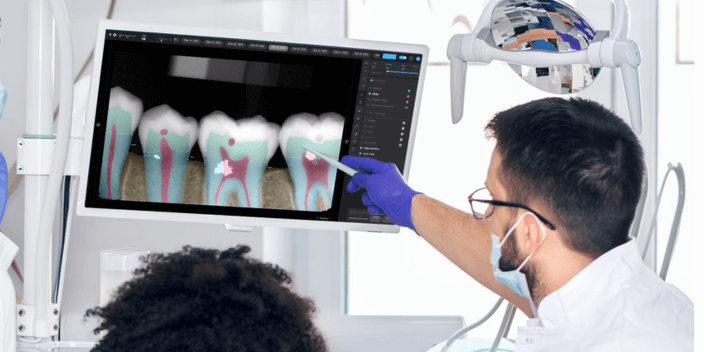
Hello Pearl’s Second Opinion is the first real-time dental AI platform to automatically detect numerous conditions in X-rays.
Dentists using Second Opinion gain a second set of eyes to help ensure that they’ve considered many common conditions that appear in radiographs.
That assurance comes from the system’s ability to detect signs of various dental pathologies and other treatable conditions found in dental radiographs. These include hard-to-spot issues such as incipient caries and the early signs of a periapical radiolucency.
Second Opinion doesn’t just help me find early signs of decay. It actually helps me explain them. And I’ve seen such a significant increase in patients taking up preventative treatments. More hygiene visits, morefissure sealants, more proactive care. But the best bit? Well, it’s making me a better dentist, a more prevention focused one. It’s helping me live up to the ethos that I built this practice on.
Dr Alan Clarke
Consistent, real-time results
Machines can perform the same task over and over again, without getting bored, tired or distracted. That means that Second Opinion will deliver the same high-quality analysis every time.
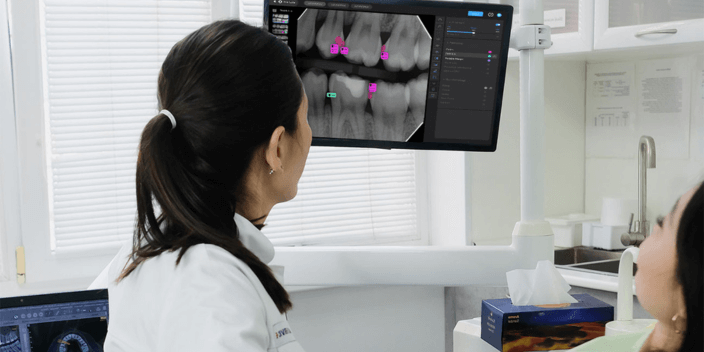
It analyses and instantly delivers results whenever a new radiograph is captured. Dentists can count on reliable support in real time while patients are still in the chair.
Elegant, easy-to-use interface
Second Opinion was designed to make it easier for dentists to read radiographs and communicate findings to patients.
Its crystal-clear, high-contrast user interface is designed to deliver optimal X-ray viewability. Its intuitive image adjustment controls let dentists to see exactly what they want, how they want. They can then effortlessly share their findings in a way that patients can easily understand.
With Hello Pearl, patients no longer felt they were being sold treatments – they felt informed and empowered, confident in their choices and in the quality of care they received.
Dr Kunal Rai
How does Hello Pearl’s AI work?
Hello Pearl’s revolutionary technology was trained using machine learning algorithms. It learned from the largest collection of expertly annotated dental radiographs in the world. Information was obtained from thousands of X-rays, which had been analysed by different dentists from different areas of speciality and experience.
This huge dataset allows Hello Pearl AI to quickly find anomalies on X-rays. It suggests what problems the patient might have based on previous X-ray analyses.
Its findings are presented in real-time using colourful, easy-to-follow roadmaps towards improved dental health.
What role does the dentist have?
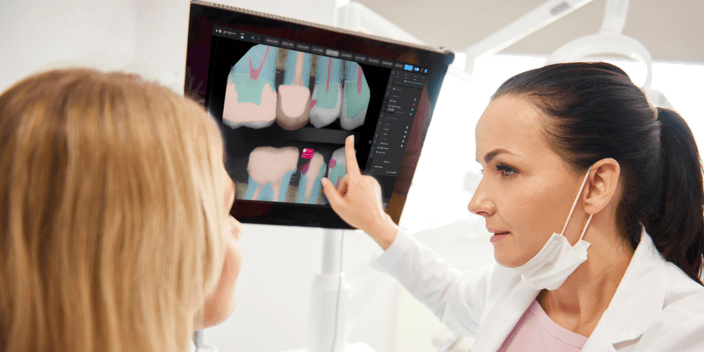
Hello Pearl AI’s technology helps dentists spot dental anomalies. However, it does not diagnose conditions – this is still in the hands of the dentist. AI may draw attention to potential issues, but this is just one part of the process that leads to diagnosis.
However skilled or experienced a dentist is, they are still often hindered by time constraints when it comes to analysing an X-ray. This means that even the best dentist will miss potential issues revealed by the X-ray.

‘We have noted that approximately 30% more pathology is detected when AI is turned on.’
Dr Mike Barniv
Vice President of Clinical Affairs, Pearl
How does this boost patient confidence?
Hello Pearl AI technology offers a host of benefits to patients, including:
- Less time in the chair: Hello Pearl’s technology can identify potential dental issues near instantly, faster than even the most experienced dentist
- Understanding: patients will be able to see the real-time results of the AI analysis of X-rays. This can reassure patients that suggested treatments are necessary.
Practice Intelligence
Practice Intelligence gives office staff X-ray vision into practice performance. It collects evidence in patient radiographs detected by Second Opinion and treatment data from a practice management system. Dentists, office managers and clinical staff apply its findings to inform training, staffing and procurement decisions. This enables practices to ensure consistent and optimal performance.
Find out more
Hello Pearl’s AI software helps improve the efficiency, consistency and accuracy of X-ray evaluations. It streamlines practice operations with actionable clinical performance and patient health insights. The revolutionary technology was developed using machine learning algorithms trained on the largest collection of expertly annotated dental radiographs in the world. It is a game-changer for dentists and patients alike. Hello Pearl elevates the standard of care and establishes a stronger foundation of transparency and trust in dentistry.
Conclusion
AI is revolutionising the dental sector just as it is the wider world. From analysis of X-rays to office management systems, AI integration is becoming standard.
Nothing can replace the work of a skilled dentist in treating their patients. But AI is a powerful tool, streamlining the work of dental practices and providing dentists with valuable information about their patients at high speeds.
AI is set to become ever more powerful, and we can expect further innovative applications of the technology to the dental sector.
This guide offers an introduction to AI’s use in dentistry. How will you make use of it?
Stay updated with relevant information about this webinar