Tired of dodging crossbite cases? Discover how to confidently break down and treat these challenging malocclusions and finally ‘cross’ them off your blacklist!
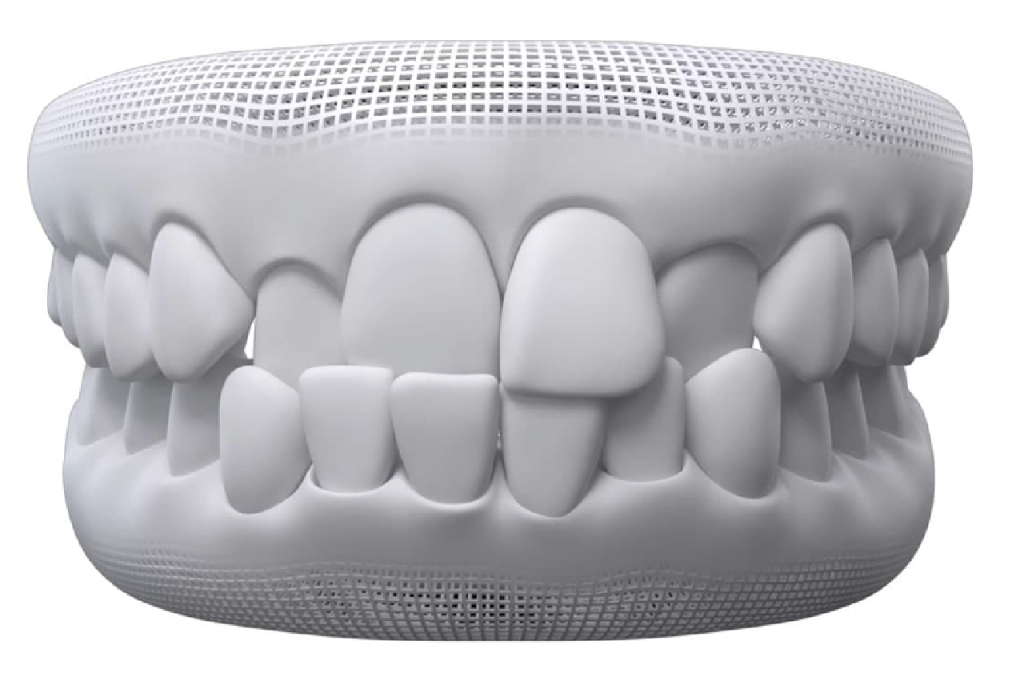
Crossbite is a relatively common malocclusion in which one or more teeth are positioned either lingually or buccally relative to their antagonists. It may affect anterior or posterior teeth, and can occur unilaterally or bilaterally. Left untreated, crossbites can contribute to functional shifts, abnormal wear, periodontal damage, and facial asymmetry.
Causes of crossbite
Crossbites may arise from a combination of genetic, developmental, and environmental factors:
- Hereditary predisposition influencing jaw and tooth development
- Premature eruption of adult teeth before primary teeth exfoliate
- Thumb sucking and related habits that alter cheek muscle tone and jaw formation
- Mouth breathing, often linked to chronic nasal obstruction or enlarged tonsils, which interferes with normal upper jaw growth.
Symptoms and complications
Crossbite patients can present with functional and aesthetic concerns, including:
- Cheek or lip biting, bruxism, and difficulty chewing
- Accelerated wear of teeth and periodontal disease leading to mobility
- Jaw muscle strain, sometimes progressing to neck or shoulder discomfort
- Temporomandibular joint (TMJ) disorders
- Reduced self-confidence due to compromised smile aesthetics and facial asymmetry.
Types of crossbite
Clinicians generally classify crossbite as either posterior or anterior:
- Posterior crossbite occurs when the upper arch is narrower than the lower, causing upper molars or premolars to occlude inside the lower teeth. It may affect one or both sides and is found in up to 16% of children in the primary dentition
- Anterior crossbite describes upper incisors that sit behind the lower incisors, involving either a single tooth or multiple teeth.
Accurate classification guides treatment mechanics and determines whether orthopedic or orthodontic correction – or both – are needed.
Diagnosis and treatment planning
A comprehensive evaluation is essential. Clinicians must differentiate skeletal from dental crossbite, assess for functional mandibular shifts, and examine arch coordination. Diagnostic records should include intraoral and extraoral photographs, radiographs, and digital scans. Invisalign’s ClinCheck software is the perfect tool to plan these movements and assess their predictability and stability.
In growing patients with skeletal crossbite, orthopedic appliances or expanders may be appropriate. For mild to moderate skeletal discrepancies and most dental crossbites, Invisalign has proven to be highly effective
Available treatment approaches
Management strategies vary according to severity and etiology:
- Clear aligners or braces to guide teeth gradually into the correct position
- Palatal expanders for children while the midpalatal suture is still adaptable
- Tooth extraction when space creation is required
- Surgical jaw expansion in severe adult skeletal cases
- Restorative options, such as bonding, in very mild cases to improve aesthetics.
Among these, Invisalign provides a minimally invasive, aesthetic option for many patients seeking discreet correction.
Mechanics of Invisalign in crossbite correction
Clear aligners correct crossbite through carefully staged movements:
- Arch expansion planned digitally and expressed incrementally
- Interproximal reduction (IPR) to relieve crowding and create space
- Cross elastics anchored on precision cuts to correct unilateral or anterior crossbites
- Optimized attachments that improve aligner grip and enable complex tooth movements.
Compared with braces, the aligners will allow more selective targeting of teeth, limiting unwanted side effects.
Expansion considerations
When planning expansion, it is critical to distinguish between:
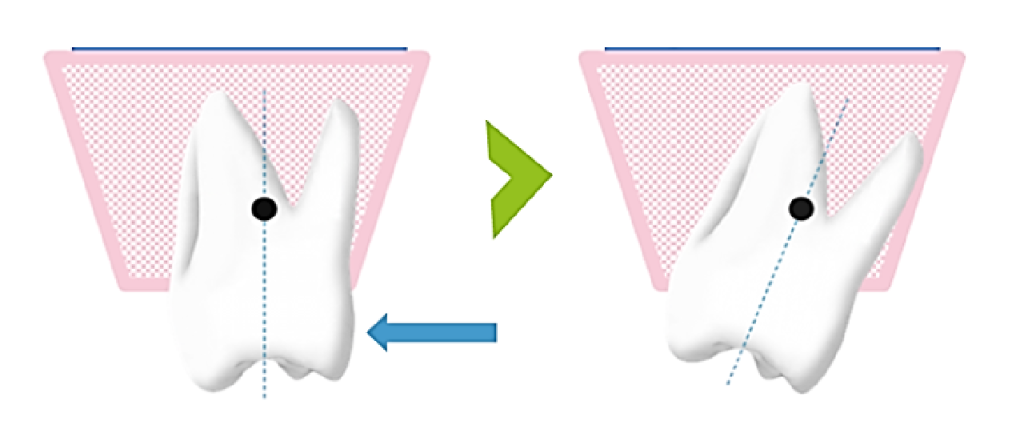
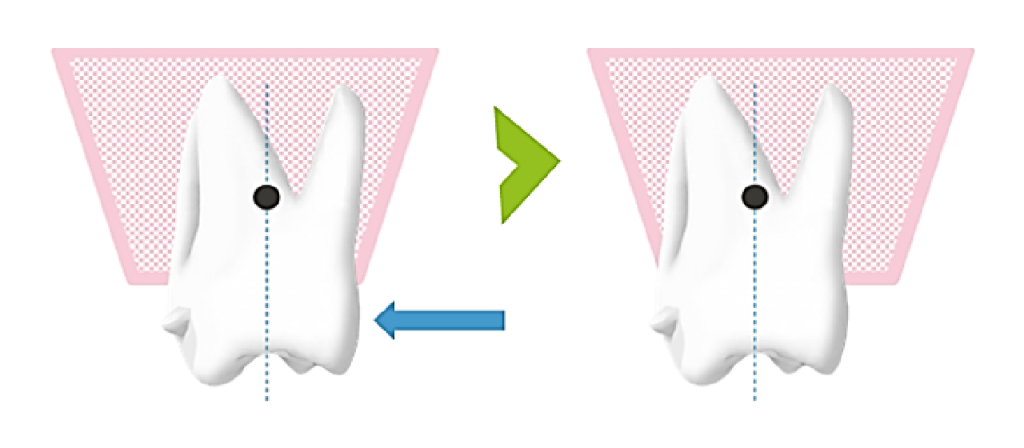
- Tipping, where crowns move buccally but roots remain relatively stable; more predictable but less ideal for long-term stability
- Translation, where crown and root move bodily; desirable but more technically demanding.
Expansion is generally easier when teeth are lingually inclined but becomes more challenging in upright or buccally inclined teeth.
In patients with thin gingival biotypes or existing recession, clinicians should limit expansion and consider IPR instead to avoid periodontal compromise.
Clinical considerations for Invisalign
- Patient selection: ensure you have diagnosed the cause of the crossbite and those with mild skeletal discrepancies will be most predictable to treat
- Compliance: patients must wear aligners 20 to 22 hours per day
- Bite ramps and elastics: bite ramps aid anterior correction; elastics are helpful for posterior crossbites
- Attachments: often required in posterior cases for retention and bodily expansion. If smartforce attachments are not on the plan for the teeth that are in crossbite, ask for the technician to add them or add conventional attachments on yourself. This helps control the tooth movement and increases the surface area coverage of the aligner
- Biomechanics: assess if the teeth are going to move by tipping and / or translation. You can see this clearly on the tooth movement table and look under the translations (B/L) and inclination. If you see there is a great degree of movement, assess the feasibility of those movements expressing and either look to minimise them or ensure there are sufficient forces planned to express that movement
- Monitoring: regular review is essential to ensure tracking and make refinements if necessary.
Important things to note
- Not all crossbite cases are suitable for Invisalign alone
- Severe skeletal discrepancies may require surgery or a hybrid approach. Success also depends heavily on patient cooperation
- Over-expansion carries risks of root dehiscence and gingival recession if not carefully planned.
Conclusion
Invisalign, supported by digital planning and modern biomechanics, can address many anterior and posterior crossbite cases effectively.
With accurate diagnosis, careful treatment planning, and patient compliance, clinicians can achieve excellent functional and esthetic outcomes while offering patients a discreet pathway to a healthier, more confident smile.
This article is sponsored by the Aligner Dental Academy.