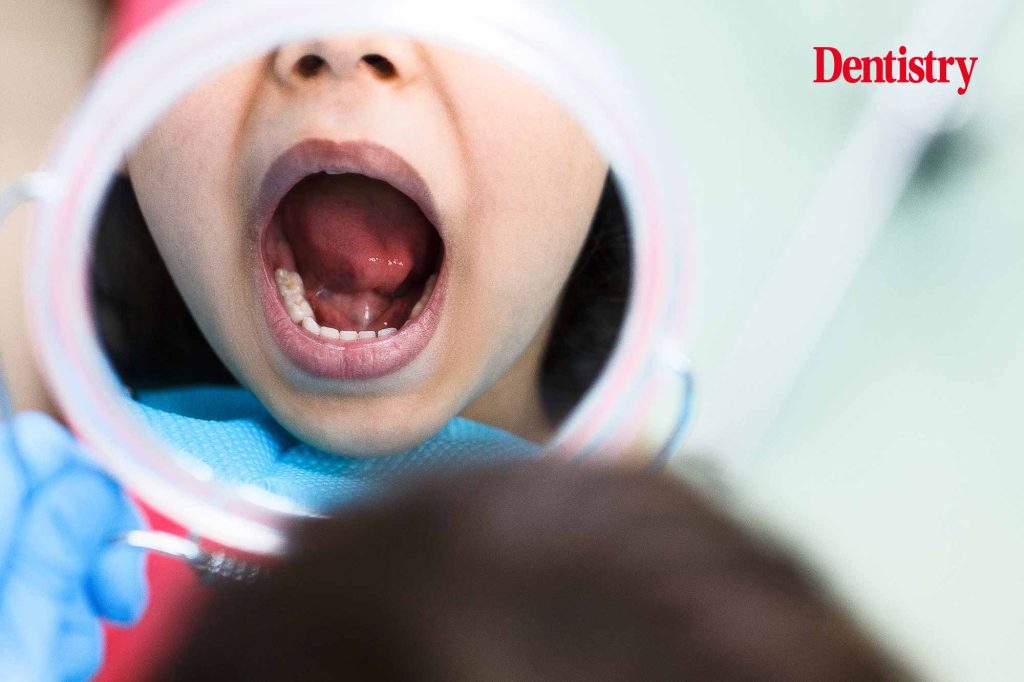
Rates of tooth decay among children remain very poor, new analysis shows – but experts suggest ‘cautious optimism’ surrounding government interventions.
A new report by the University of Leeds commends government action taken in the past year to improve children’s oral health. This includes the introduction of a national supervised toothbrushing programme and plans for the expansion of water fluoridation in the north east of England.
Analysing the latest government data by the Child of the North initiative, the team said it gives cause for ‘cautious optimism’, but the schemes need to be scaled up and strengthened to meet needs.
However, they also found that despite these improvements, children living in England’s most deprived communities are still over three times as likely to be admitted to hospital for tooth extractions than those living in more affluent areas.
Other findings include:
- Children living in the most deprived areas of England are more than twice as likely to experience decay as those living in the least deprived areas
- More than one quarter (26.9%) of five-year-olds have tooth decay
- In West Yorkshire, 950 school days were lost for dental reasons across nine schools in one academic year.
Dental disease ‘stubbornly high’
Peter Day is a professor of children’s oral health in the University of Leeds’ School of Dentistry and consultant in paediatric dentistry at Leeds Teaching Hospitals NHS Trust. He co-led the report with Zoe Marshman, professor in dental public health at the University of Sheffield.
Both researchers have acted as advisors on the UK government’s ‘supervised toothbrushing programme’, which aims to reach up to 600,000 children in the most deprived areas.
‘These are exciting times. While disease levels remain stubbornly high – impacting our most vulnerable children and families – the government has taken important steps to implement the policy recommendations outlined in our original report,’ Professor Day said.
‘As we transition into delivery mode, evaluating the impact of these policies is essential. Engagement from schools and nurseries will be critical. We must capture the broader benefits, particularly those affecting education, such as attendance, school readiness, and attainment.’
Professor Marshman added: ‘There has been no real improvement in children’s oral health for nearly 10 years and our first national report published in September 2024 called for urgent action. Since then there have been major new ambitious initiatives announced with real potential to address this worrying trend.
‘To achieve this potential requires partnership working across national and local government with child education and health professionals engaging with parents and children.
‘Universities are key to evaluating the impact of these initiatives on dental disease and child wellbeing.’
Follow Dentistry.co.uk on Instagram to keep up with all the latest dental news and trends.