
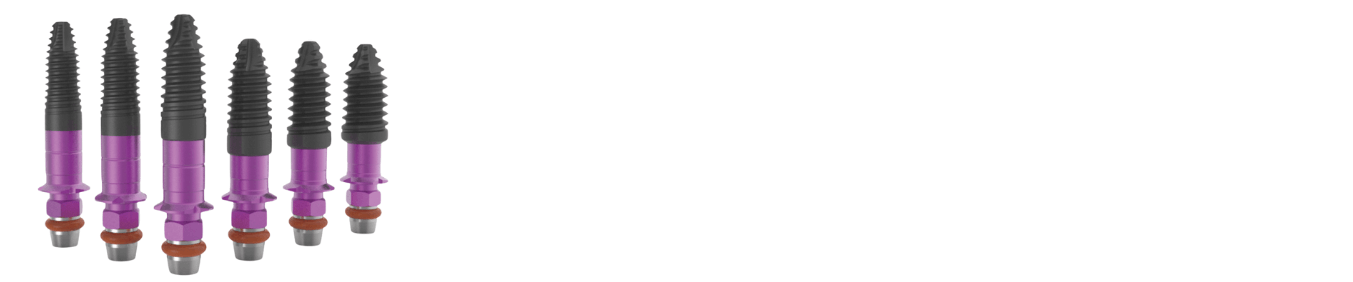
Dentistry
Dentistry’s guide to dental implants
Last updated: 18th November 2025
Contents
The dental implants market is growing rapidly. This is in part due to increased life expectancy, as older patients with missing teeth seek long-term alternatives to dentures.
This guide will explore some of the aspects of dental implants to be taken into consideration when considering treatment options. It will also present one of the leading manufacturers of dental implant products.
Introduction to dental implants
Dental implants are long-term tooth-replacement prosthetics. They are mostly made from titanium, but there is also a smaller market for ceramic implants, usually using zirconia.
Dental implants are usually placed directly into the jawbone, using a screw-like fitting.
History of dental implants
Dental implants, in their current form, were first developed in the mid-20th century. An orthopaedic surgeon discovered in 1952 that titanium could fuse with bone following an experiment into how bone could heal around a titanium cylinder in the femur of a rabbit. In 1965, the first dental implant using titanium was placed into the mouth of a volunteer.
By 2012, an estimated 130,000 dental implants were placed every year in the UK alone. The global dental implant market is now worth an estimated £5.9bn.
Benefits of dental implants
Compared with non-permanent tooth replacement treatments, such as dentures, implants have a host of benefits. These include:
- Appearance: implants offer a natural appearance. To the observer, they are practically indistinguishable from the patient’s natural teeth
- Durability: implants are permanent. If they are cared for appropriately, they will last a lifetime
- High success rate: worldwide, only 3.1% of implants are estimated to fail after being placed
- Comfort: compared with dentures, implants stay firmly in place and do not cause discomfort
- Adjacent teeth: dental implants do not require the alteration of adjacent teeth, as is the case with bridges. This lowers the risk of oral health problems.
Titanium vs ceramic implants
Titanium is used in around 85% of implants globally. However, zirconia implants are rapidly increasing in popularity, by around 10% per year. Both materials are capable of osseointegration, and both are considered entirely safe and inert in the human body.
- Titanium implants: titanium is the most commonly used material for dental implants. Implants made of titanium can last more than 40 years, often longer. They are also generally cheaper than ceramic implants.
- Ceramic/zirconia implants: implants made with zirconia are growing in popularity. Due to their more recent emergence, studies into their longevity are ongoing. Some will favour zirconia implants for aesthetic reasons, as the material is white, like natural teeth, compared with the grey-silver colour of titanium. However, in most cases, this will not be noticeable. People may also prefer to use non-metallic ceramics instead of titanium due to metal sensitivity.
Types of dental implants
- Endosteal implants: these are the most common implant designs. Endosteal implants are placed directly into the jawbone. They come in a variety of sizes and shapes to suit different bone structures and tooth types.
- Subperiosteal implants: in cases where the patient has insufficient bone height for endosteal implants, subperiosteal implants may be used as an alternative if they can not undergo bone augmentation procedures. In this treatment, the implant is placed under the gumline but above the jawbone.
- Mini implants: these smaller implants are designed for patients with lower bone density
- All-on-four implants: all-on-four implants are used for full arch replacements. A full bridge of teeth is supported using four implants. The result is a full restoration.
Dental implants cost
The price of dental implants varies based on factors including length of treatment, materials used and location of treatment. However, titanium implants usually cost between £2,000 and £2,800 per implant (plus crown). Ceramic/zirconia implants cost a little more, up to around £3,500 (with crown).
Dental implant process
The process of placing implants can take between three and 12 months. It can be broken down into the following stages:
Consultation and treatment planning
- The dentist or oral surgeon will first assess the patient’s oral and general health. This will determine whether implants are an appropriate choice
- The dental professional will then use X-rays and/or 3D imaging to plan the treatment. This can also measure jawbone density.
Preparations
- Before surgery can begin, any gum disease present in the patient’s mouth must be treated
- Bone grafts may also be required before the implants are placed if the bone density is too low
- If a tooth is still in place, it must be extracted before the process continues.
Surgery
- The dentist or oral surgeon will then surgically place the implant. This usually takes place under local anaesthetic
- An incision is made in the gum, exposing the jawbone
- A small hole is drilled into the jawbone, and a titanium implant post is placed
- The gum is then stitched closed
- Some patients may opt for a temporary tooth to be placed during this stage. This is for aesthetic reasons, for patients who do not want to appear to be missing a tooth during the healing process
- Some patients may also opt to have the abutment placed at this stage. However, this means the abutment will be exposed above the gumline during the lengthy osseointegration process (see below).
Healing
- During the healing process, the bone and implant fuse together in a process called osseointegration. This can take several months
- Factors such as bone quality influence the time required for the osseointegration process to complete. The time taken to heal will also depend on the patient’s natural healing ability
- During the healing stage, the patient should adapt their diet to ensure success. For example, patients should avoid hot drinks and alcohol and prioritise softer food. However, it is also important to maintain a balanced diet, as this aids the healing process, reduces inflammation and reduces the risks of complications.
Placement of abutment
- The abutment can be placed once the osseointegration process is complete
- The dentist/oral surgeon will reopen the gum to expose the implant
- They will then attach the abutment to the implant
- The gum will then be closed around the abutment, which is slightly elevated above the gumline
- This is followed by another healing process, which takes around two weeks.
Placement of final restoration
- The dentist/oral surgeon can then place the final teeth onto the abutments.
BTI Biotechnology Institute
BTI Biotechnology Institute was founded in 1999 by Dr Eduardo Anitua, the current president and scientific director of the company. Today, it is one of the leading companies in implantology and oral rehabilitation. It is also an international scientific benchmark in the application of regenerative therapies in different areas of medicine. These range from the field of oral surgery to specialities such as traumatology, dermatology, ophthalmology, sports medicine, cardiovascular, plastic and aesthetic surgery, among others.
BTI has a clear research vocation and is considered a worldwide scientific reference in regenerative medicine. This is due to the development and patents of the Plasma Rich in Growth Factors (PRGF) – ENDORET technology in different medical specialities.
In the area of oral implantology, it has developed an implant system that stands out internationally for its quality, innovation and versatility.
BTI has a multidisciplinary professional team made up of more than 300 people. Of this, 20% is dedicated to research and development.
BTI facilities have exceptionally modern medical and audiovisual technologies, including:
- 5,000m2 dedicated to training, research and clinical practice
- 2,500m2 dedicated to the manufacture, control and research of its products.
BTI implant system
The BTI implant system offers a wide range of solutions for addressing any implant-related challenge. BTI is the technological leader in minimally invasive surgery. This makes it possible to achieve excellent results using predictable techniques and products. These include short implants (from just 4.5mm in length) and solutions for narrow crests (with implants from just 2.5mm in diameter).
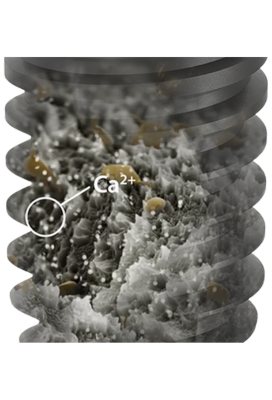
For each platform, we have implants of different diameters. Some of them have reduced platforms, helping to manage fine gingival biotypes and obtain perfect tissue and aesthetic maintenance.
In the manufacturing of its implants and components, BTI selects the ideal material and follows the most rigorous processes, which achieve:
- Optimum chemical composition
- Optimum mechanical behaviour
- Optimum surface microstructure
- Optimum sterility
- Optimum cell feasibility.
BTI implant design
The properties of BTI implants and the UnicCa surface are the result of special care in the selection of the raw material and manufacturing of the product, establishing exclusive BTI control points during all of the production phases.
BTI CORE implant system: evolution and simplicity
The profitability of your clinic can be increased using CORE implants. The singular prosthetic platform allows you to reduce your investment in prosthetic components. This minimises errors in the restorative process and enables a simplified and shorter prosthetic procedure:
- One single prosthetic platform and six implant diameters adapt to all of your patients’ bone requirements: simplicity and savings
- 3.5mm platform to better manage fine gingival biotypes: reduces tissue recession
- Create a narrow prosthetic emergence: facilitates restorations in limited interdental spaces
- Conical apex and morphology (for lengths of +6.5): facilitates insertion into any type of bone, achieving great primary stability
- Suitable for the treatment of post-extraction alveoli
- Includes short implants and is the ideal solution for vertical atrophies: reduces surgical trauma and increases patient acceptance
- Preparation of the CORE bed. Due to the conical shape of the implant, the drilling sequence is much reduced: this saves surgical time and means simpler drilling
- It also uses biological drilling, has the UnicCa surface and maintains the Bioblock concept for a more predictable prosthetic solution.
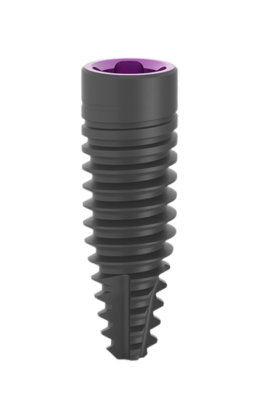
Biological drilling
Biological drilling, developed by BTI, provides numerous clinical advantages. These include:
- Collection of autologous particulate bone
- Better control of the direction and depth of the osteotomy
- Low temperature of the surrounding bone
- Optimisation of the biological bed
- Improvement of biosafety by reducing aerosols.
BTI has designed drills that are suitable for this technique in order to optimise the process. First, they have a purely apical cut (not lateral), allowing you to drill deeper and not wear away the bone walls.
And their helical design is highly retentive for the bone particles being cut, allowing large quantities of bone to be obtained from the drilling area. The bone obtained is placed into a glass container with the autologous plasma that, as well as keeping it hydrated with the patient’s proteins during the surgery, may be used as a particulate autologous graft.
Advantages and benefits of biological drilling
- It allows you to collect bone during drilling, and, therefore, it can be used as a particulate autograft when mixed with the patient’s plasma, which is obtained with PRGF – ENDORET technology
- The slow working speed does not increase the surrounding bone temperature. Therefore, we avoid necrosis. Also, because irrigation is not used, there is no socket cleaning, achieving a biological bed that is suitable for dental fixing
- It enables you to maintain the direction and control of the working depth
- It reduces mechanical trauma, as well as marginal bone loss.
Short and narrow implants for the atrophic maxilla
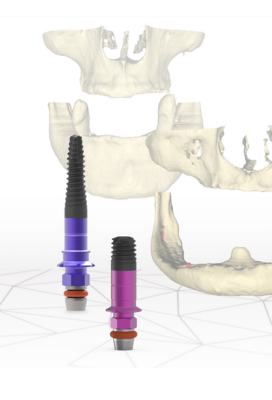
It is possible to provide bone reabsorption treatments without complex and costly reconstructions, post-operative complications or delays in functional and aesthetic rehabilitation.
Less trauma: no complex reconstructions
Most severe maxillary atrophies need to be treated using extremely traumatic surgical procedures that require complicated approaches.
BTI has solutions that do not involve complex reconstructions. They are less invasive thanks to the narrower and shorter implants, allowing you to address these cases in a simpler way.
Greater success: no postoperative complications
Simpler protocols imply greater predictability.
Not having post-operative complications guarantees a higher rate of successful surgical procedures and improves patient satisfaction. Patients are subsequently more likely to share their positive experience.
Find out more
Find out how BTI’s implant technology can help transform your patients’ smiles.
Conclusion
This guide has offered an introduction to dental implants and explored some of the best available on the market. Ensuring you are up to date and informed on the latest developments in the sector means your practice will be at the cutting edge of the implants market.
Stay updated with relevant information about this webinar