

Dentistry
Aura’s guide to infection control in dental practice
Last updated: 3rd December 2025
Contents
Infection prevention and control (IPC) is essential for protecting the health of patients, staff, and visitors, and it is a legal responsibility under the Health and Social Care Act 2008 (Regulated Activities) Regulations 2014, Regulation 12 (Safe Care and Treatment).
Effective infection control underpins every aspect of a dental professional’s work, from the choice of personal protective equipment (PPE) to the safe management of instruments and the clinical environment.
This guide explains the principles and practical application of infection control in dental settings and highlights the products and training that can help your team maintain full compliance with national standards.
What is infection control?
Infection control refers to the systems and processes that prevent the spread of potentially harmful microorganisms between patients, staff, and the wider environment.
Dental settings face unique challenges due to the nature of procedures that can generate aerosols and involve exposure to saliva, blood, and contaminated instruments.
Key components of infection control include:
- Effective hand hygiene
- Decontamination of reusable instruments
- Appropriate PPE use
- Environmental cleaning and zoning
- Waste management in line with COSHH regulations.
Because it is impossible to know who may be carrying an infectious agent, standard precautions must be applied to every patient.
How does infection spread?
Infections in dental settings can spread through several routes, including:
- Contact transmission – direct (person to person) or indirect (via contaminated surfaces or equipment)
- Droplet transmission – exposure to droplets from coughing, sneezing or talking
- Airborne transmission – inhalation of aerosols produced by aerosol-generating procedures (AGPs).
Infection control aims to reduce risk through all of these routes.
Chain of infection
The chain of infection describes how infection is transmitted from one host to another.
Breaking any link in this chain helps prevent cross-infection.
- Infectious agent – the microorganism capable of causing disease
- Reservoir (source) – where the pathogen lives and multiplies
- Portal of exit – how the pathogen leaves the source (e.g. saliva, blood)
- Mode of transmission – how it spreads (e.g. hands, instruments, air)
- Portal of entry – how it enters a new host (e.g. mucous membranes, skin break)
- Susceptible host – an individual who is vulnerable to infection.
Decontamination techniques
Decontamination is the process that removes or destroys contamination to render reusable items safe for further use.
1. Cleaning
The removal of visible soil and debris using warm water and detergent. Cleaning must always be performed before disinfection or sterilisation. Manual cleaning should use water below 45 °C to avoid coagulation of proteins.
2. Disinfection
Washer disinfectors both clean and thermally disinfect instruments, reducing microbial contamination to a safe level. Disinfection does not destroy all spores or certain viruses.
3. Sterilisation
Sterilisation removes all microorganisms and spores. It is carried out in a validated autoclave under high heat and pressure. Practices must perform daily steam-penetration and automatic control tests and ensure annual validation as required by HTM 01-05.
Infection control guidance
The Department of Health and Social Care (DHSC) sets national standards through Health Technical Memorandum 01-05: Decontamination in Primary Care Dental Practices.
HTM 01-05 aims to raise the quality of decontamination work in dental settings. It distinguishes between:
- Essential quality requirements – minimum standards that every practice must meet
- Best practice requirements – aspirational standards that practices should plan to achieve
The Infection Prevention Society (IPS) provides a free Dental Audit Tool, endorsed by NHS England, to support compliance assessment against HTM 01-05.
Key infection control measures
To maintain a safe clinical environment, practices should implement the following measures:
- Infection control lead – a nominated individual with suitable training who oversees compliance and staff competence.
- Checklists and schedules – routine cleaning and decontamination schedules with clear accountability.
- Hand hygiene – perform before and after patient contact, after removing gloves, and following instrument handling.
- PPE – appropriate to the procedure. For example, gloves, masks, visors, aprons, and patient protection such as bibs or eyewear.
- Ventilation – adequate airflow reduces aerosol risk; use high-volume suction during AGPs.
- Manual cleaning – use a measured detergent solution and water under 45 °C.
- Ultrasonic cleaning – removes debris from instruments using sound waves, reaching areas that manual cleaning may miss.
- Washer disinfectors – automate cleaning and provide validated thermal disinfection.
- Autoclaves – provide validated steam sterilisation with routine testing and maintenance.
- Packaging and storage – sterilised instruments may be stored for up to one year if pouched and kept in appropriate conditions; unwrapped items should be used within one week.
- Waste disposal – manage in accordance with Control of Substances Hazardous to Health (COSHH) Regulations 2002, HTM 07-01:Safe Management of Healthcare Waste and local clinical waste contracts.
- Zoning – clearly separate dirty and clean areas in local decontamination units to prevent cross-contamination.
Aura Infection Control
Aura Infection Control is a trusted UK specialist in infection prevention and control for dental practices.
Based in County Durham and operating across the UK and Ireland, Aura provides expert guidance, validated products, and accredited training to support compliance with HTM 01-05 and CQC standards.
With decades of sector-specific experience, Aura helps dental teams create safe, compliant, and efficient working environments through practical support and continuous education.
Products
Aura Infection Control is the UK’s leading provider of innovative, clinically validated infection control products and solutions.
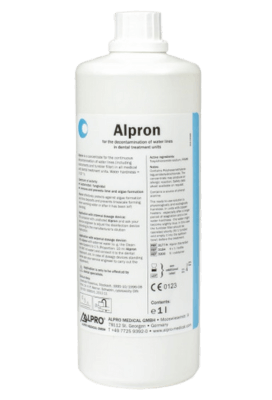
A flagship product is Alpron, the market leader in dental unit waterline (DUWL) maintenance. Alpron is validated to maintain dental unit waterlines within potable water standards (BS EN 1717), helping to prevent biofilm formation and contamination.
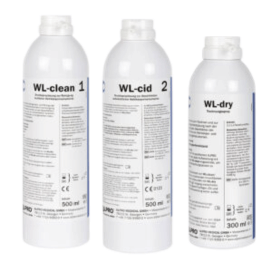
Another key product, the WL System, provides effective internal cleaning and disinfection of dental handpieces and turbines, reducing infection risk and extending equipment lifespan.
Product benefits
- Professionally formulated, fit-for-purpose solutions
- Clinically validated and certified efficacy
- Protects staff and patients
- Meets HTM 01-05 and CQC standards
- Excellent material compatibility that preserves valuable instruments.
Training
Aura Infection Control delivers a range of verifiable CPD training options for dental teams and decontamination leads, ensuring compliance and confidence in infection control.
Verifiable CPD courses
Short courses for up to 15 participants, covering topics such as:
- Dental unit waterline management
- Handpiece care and maintenance
- Legionella awareness.
Each course provides one hour of verifiable CPD, aligned with GDC learning outcomes, and can be delivered virtually at a time convenient for the practice.
Dental decontamination leadership programme
An ILM-recognised programme, providing 12 hours of verifiable CPD. The programme develops both technical decontamination knowledge and leadership skills to manage daily operations effectively.
Programme features
- Free validation toolkit for in-practice use
- Access to expert tutor support
- Meets code of practice and HTM 01-05 requirements for role-specific training.
Compliance Club
The Compliance Club is the UK’s most popular dental unit waterline auditing service, helping practices maintain consistent testing and documentation for compliance.
Features
- Automatic quarterly delivery of TVC (total viable count) samplers
- Water-quality certification confirming results meet potable standards
- Dedicated clinical support from a team with over 20 years of DUWL expertise
- Discounted product pricing and exclusive 15% member discount
- Flexible membership – cancel any time before dispatch.
Benefits
- Guaranteed consistency with quarterly testing
- Saves time and administrative effort
- Provides clear evidence of safe, compliant waterlines.
Practice support
Aura’s expert advisors provide free Dental Decontamination Reviews, helping practices assess current protocols and identify improvements. These reviews take around 30 minutes and can be delivered via Teams, Zoom, or telephone.
Features and benefits
- Impartial expert guidance
- No-cost consultation
- Tailored advice for your practice
- Improved safety and efficiency
- Assurance of alignment with HTM 01-05 and CQC expectations
- Confidence ahead of inspections.
Find out more
Get more information on how Aura Infection Control can help your professional needs.
Conclusion
Effective infection prevention and control is the foundation of safe dental care. By following HTM 01-05 guidance, maintaining validated decontamination processes, and investing in continuous training and support, practices can ensure compliance, safeguard patients, and build team confidence.
With trusted expertise, proven products, and dedicated professional support, Aura Infection Control helps every dental practice stay ahead in infection prevention and deliver the highest standards of safety and care.
Stay updated with relevant information about this webinar