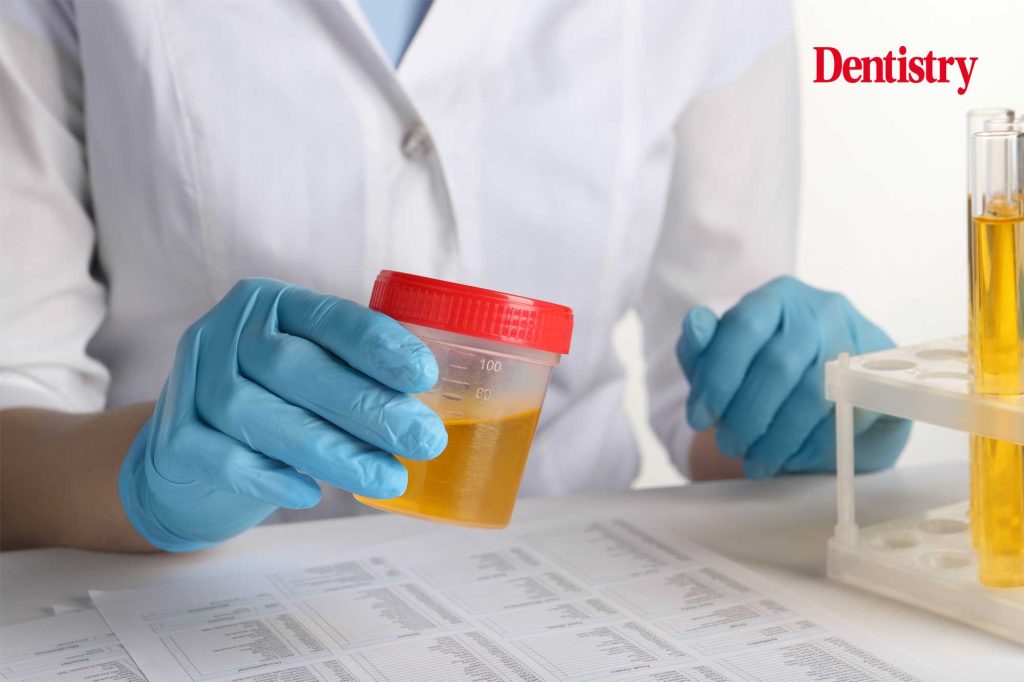
A yeast platform that converts human urine from wastewater into hydroxyapatite, a substance used to make dental implants, has been developed.
Researchers from University of California (UC), Irvine hoped the technique would have two major benefits. Firstly, creating a high-value, biocompatible material which can be used to create dental and bone implants, and restore archaeological artefacts. Secondly, removing harmful human urine from water systems.
David Kisailus is a professor of materials science and engineering at UC Irvine and a co-author of the study. He said: ‘This process achieves two goals at the same time.
‘On the one hand, it helps remove human urine from wastewater streams, mitigating environmental pollution and the buildup of unwanted nutrients. On the other hand, it produces a material that can be commercially marketed for use in a variety of settings.’
The inspiration for the technique came from a natural process in the body. In mammals, cells draw calcium phosphate from bodily fluids and convert it into hydroxyapatite. As these cells are not suitable for large-scale production of hydroxyapatite, the researchers turned to synthetic yeast cells that carry out a similar process.
The study found that this method can produce up to 1g of the implant material per litre of urine.
Could human urine become an alternative to plastic?
Professor Kisailus added: ‘This process to yield hydroxyapatite, or bone mineral, takes less than one day. The fact that it uses yeast as a chassis, which is inexpensive and can be placed in large vats at relatively low temperatures – think about beer that’s made via fermentation processes and is well scaled – shows that this can be done easily without major infrastructural needs, and that has the added benefit of making it accessible to developing economies.’
According to the researchers, hydroxyapatite is lightweight and mechanically strong and durable. They said that if synthetic hydroxyapatite from human urine can be produced at scale, it could serve as a ‘renewable and biodegradable alternative to commodities like plastics’.
Next steps for the research include producing other materials using the same process. Professor Kisailus said: ‘I am continuing to work with Professor Yasuo Yoshikuni from Lawrence Berkeley Laboratory, a corresponding author of this paper, to make other materials using this process, including materials for energy-based applications.
‘We are currently developing strategies to leverage his yeast platform with our 3D printing and structural knowledge to make multifunctional architected materials.’
The study was published in the Nature Communications journal in May.
Follow Dentistry.co.uk on Instagram to keep up with all the latest dental news and trends.