
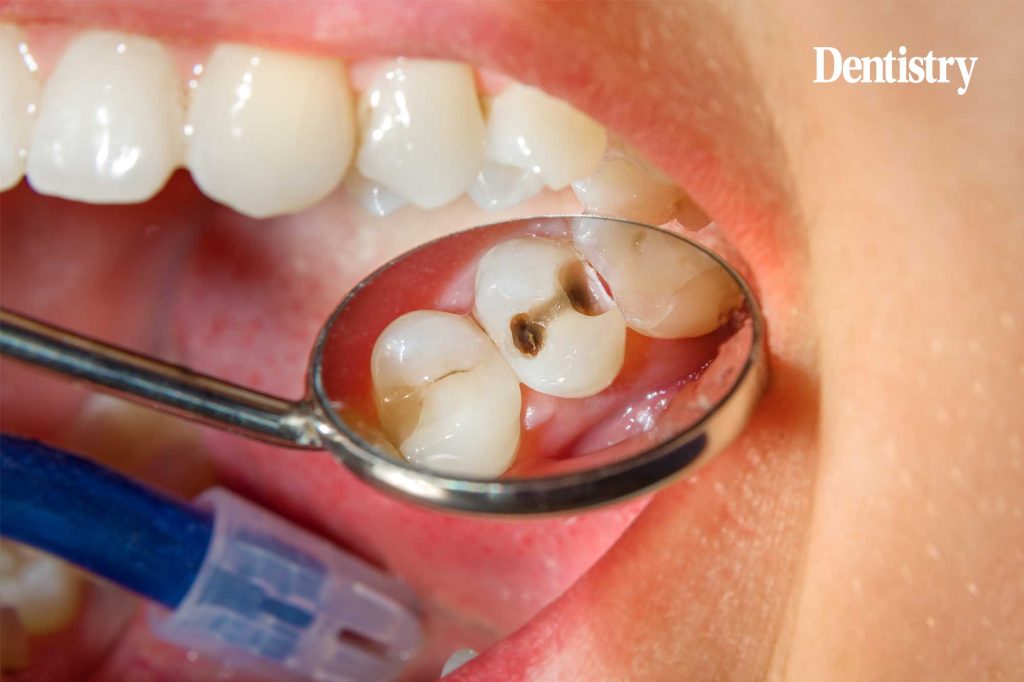
Michal Ganowicz shares a case of deep caries using the Bio-Bulk fill technique with Biodentine to restore tooth health and function.

‘I am a specialist in conservative dentistry and endodontics with 20 years of experience working in Warsaw, Poland. My daily practice involves treating complex issues such as occlusion and temporomandibular joint disorders. I am particularly passionate about using composite materials and employing biological treatment methods. I fully endorse the power of adhesion and the regenerative abilities of the pulp. During my lectures and workshops, I advocate for simplified dental treatment procedures as I firmly believe they are the optimal choice for both dentists and patients alike.’
Michal Ganowicz
The current method of choice for treating tooth decay is to prepare the cavity and fill it with composite material. Properly performed, composite fillings effectively restore tooth function, and their effectiveness has been proven in millions of cases. However, this treatment is essentially prosthetic. Every filling, even the smallest, is a prosthetic.
At the same time, we know that healthy enamel, dentine and pulp are precious. A vital pulp produces dentine, nourishes the hard tissues, conducts stimuli and participates in the immune response. A tooth with a vital pulp is always better than a non-vital one. Therefore, practising dentists should spare the hard tissues of the tooth and the pulp at all costs and use materials and methods that minimise the need for intervention.
Clinical signs and symptoms
The patient presented with hypersensitivity of tooth 16. The tooth had been treated two months previously for a deep MOD cavity with a zinc oxide-eugenol paste. Due to the poor mechanical properties of such a temporary filling, parts of the dentine were exposed, hence the hypersensitivity symptoms. Tap test was negative. The response to cold stimuli was normal.
Diagnosis
Deep caries, uncomplicated.
Procedure and treatement
After anaesthesia and application of a rubber dam, the cavity was prepared. The dentine was left demineralised on pulp chamber walls of the cavity. A minimum of 2mm of hard tooth tissue was left fully prepared and hard around the cavity margin to ensure tightness of the future restoration.
The proximal walls were restored with A3 universal composite after etching and using a universal bonding system at the cavity margin. The rest of the cavity was filled with Biodentine up to the occlusal surface. After 12 minutes of initial setting of the Biodentine, the rubber dam was removed and the patient was sent home. The next appointment was scheduled for two weeks.
Between visits, the patient had no toothache and the sensitivity diminished. The sensitivity to cold was still normal. Therefore, a rubber dam was placed and 1.5mm of the outer layer of Biodentine was removed. In this case, it was not necessary to anaesthetise the tooth.
After selective enamel etching with a universal bonding system, the cavity was filled with one layer of A3 universal composite, prepared and polished.
Follow up
One year after the last visit, the patient has no sensitivity and the tooth responds correctly to stimuli.
Discussion
Untreated caries eventually leads to destruction of the hard tissues of the tooth, inflammation and even pulp necrosis. Therefore, the methods of choice should be those that can postpone the need for root canal treatment and preserve tooth structure and pulp vitality. Indirect pulp capping with Biodentine fulfils these criteria, as Biodentine has a positive effect on the condition of the pulp, promotes remineralisation and dentine restoration, and acts as a restorative material.
In addition, according to the author’s clinical experience and the observations of other authors, Biodentine works well in direct pulp capping in cases of irreversible pulpitis.
After filling the entire cavity with Biodentine and waiting 12 minutes, we can send the patient home. Unfortunately, Biodentine is not suitable as a permanent filling due to its abrasiveness and colour. According to the manufacturer’s recommendations, it can be used as a long-term temporary filling for up to six months.
However, if we use the Bio-Bulk fill method and cover Biodentine with a 1.5-2mm layer of composite, we eliminate the problem of abrasion and the aesthetics of the filling, while retaining the positive properties of the bioactive cement. In this case, the Biodentine acts as a dentine substitute and the composite as an enamel substitute. Together they can function as a permanent restoration for many years.
In theory, we can cover Biodentine with composite 12 minutes after application. However, it is better to wait at least two weeks for the material to fully cure if possible. After this time, it will have a micro- hardness like natural dentine. A stronger bond between the bonding system and its surface is also achieved. Another consideration is the ability to control the vitality of the pulp over time. This will be particularly important in the case of direct pulp capping in a state of irreversible pulpitis.
Conclusion
The Bio-Bulk fill method with Biodentine works well in the treatment of deep caries. The application of bioactive cement to demineralised dentine preserves as much hard tissue as possible and significantly reduces the risk of pulp necrosis.
Biodentine as a dentine substitute, combined with an outer layer of universal composite, works perfectly as an aesthetic permanent filling.
Find out more about Biodentine.
This article is sponsored by Septodont.


