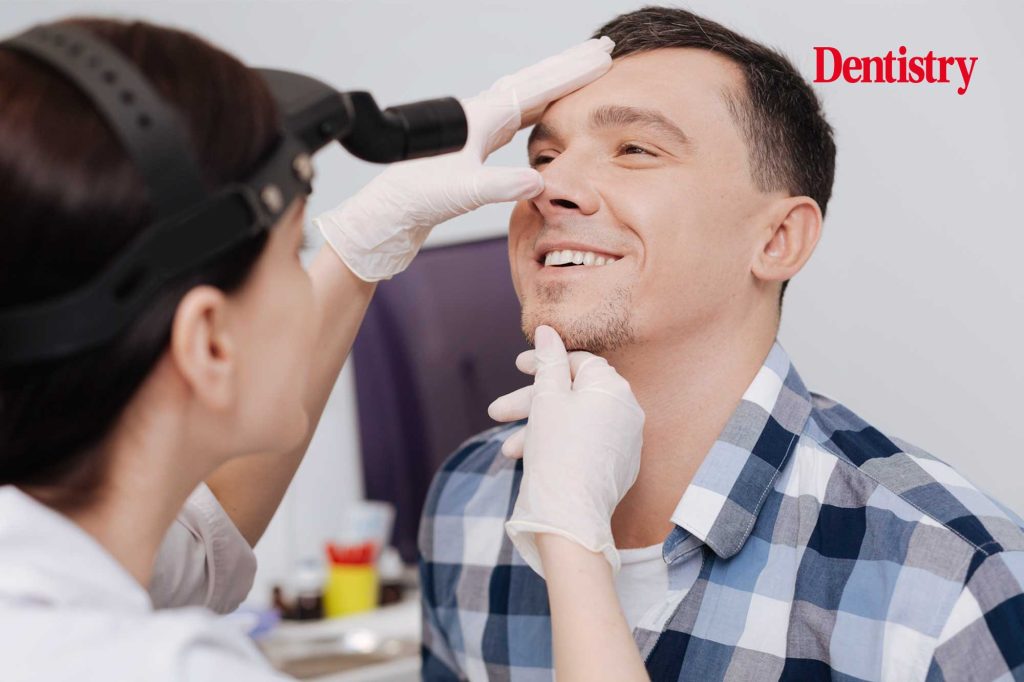
Abbad Toma explains the impact of rhinology, focused on conditions of the nose and paranasal sinuses, on dental implant surgery and how collaboration with a rhinologist can improve outcomes.
Rhinology is a subspecialty of ear, nose and throat surgery (ENT) specialising in conditions of the nose and paranasal sinuses. This brings the rhinologist very close to the dental implant surgeon with the interface being at the floor of the maxillary sinus and the upper jaw.
According to the literature, the number of implanted people is increasing by 500,000 per year in the USA alone. Like in all surgery, there are potential risks of complications. In order to reduce this risk or better avoid complications altogether, it is important that we work together, rhinology surgeon and dental surgeon, to understand our patients’ expectations and achieve the best results for the patient.
I have been liaising, lecturing and I have been involved in courses with my dental implant colleagues for over 15 years. In this time there has been a significant improvement in our understanding of dental implants. Particularly, how they interact with the maxillary sinuses and the surrounding structures, such as the floor of the nose, pterygoid plates, zygoma and even the orbit.
How does rhinology affect dental implants?
Sinus disease such as sinusitis, nasal polyps and other conditions interfering with the function of the maxillary sinus can lead to failure of a dental implant or the sinus lift if this was part of the treatment plan. As dental implant technology progresses and more systems are introduced which may require more invasive surgery than a simple dental implant, such as zygoma and pterygoid implants, there are more risks of potential maxillary sinus complications and complications in the surrounding structures.
In addition to the usual dental assessment, the initial assessment of a patient being considered for dental implant surgery should include a history of any possible sinus disease such as rhinosinusitis (sinusitis) with or without polyps, recurrent acute sinusitis and previous nose or sinus surgery. The main symptoms suggestive of nose and sinus disease include nasal obstruction, an excessively runny nose, facial pain, frontal headaches, and reduced or loss of the sense of smell.
Pre-surgical scanning
When I first started lecturing on this subject, very few patients underwent scanning prior to dental implants. Today it is imperative that imaging in the form of cone beam CT scan or a full paranasal CT scan is carried out before any such surgery.
Besides the implant and sinus lift planning, the scans may show infection within the sinuses, they may show nasal polyps effecting sinus ventilation, asymptomatic tumours, abnormal bone or even absent sinuses which can be a normal anatomical variant or a sign of chronic disease.
If the patient’s history or the imaging show signs of sinus disease, the patient should be referred to a rhinologist for further evaluation of the nose and sinuses prior to dental implant insertion or a sinus lift.
Referring to rhinology
Once the referral to the rhinologist has been made, the patient will undergo a thorough history and examination of the nose and sinuses. This may include nasal endoscopy and further imaging to include all the paranasal sinuses unless this was included in the original CBCT. Based on this assessment, in many cases no treatment is required as many of the imaging findings are incidental and not pathological.
However if pathology is found, we treat the patient with medications including steroid-based nasal spray in the case of allergic sinusitis, or antibiotics if sinus infection is diagnosed. Patients may need surgery. This is indicated in cases of failed medical treatment, preexisting odontogenic sinusitis or an unresolving oroantral fistula.
Surgery for these patients will be by endoscopic sinus surgery (FESS). In most cases this needs a general anaesthetic and access to the nasal cavity and sinuses with the aid of rigid endoscopes to make sure all the sinuses are healthy and ventilating prior to any dental implants or sinus lift. The endoscopic endonasal approach also has the advantage of not interfering with the sublabial soft tissues or the underlying bone, leaving it intact for further restorative surgery in the future
Post-surgical complications
The other role for the rhinologist is if the patient suffers post-surgical complications such as a lost implant into the sinus or sinusitis after surgery, then the rhinologist can help in treating the sinusitis or retrieving an implant. This usually requires a joint discussion between the nose surgeon and the dental surgeon to agree on the best course of action.
Nose surgeons have a lot to learn from dental surgeons and vice versa. If your practice involves dental implant surgery, sinus lifts or any restorative type of treatment, it would be advisable to seek out who the rhinology expert is at your local ENT department (NHS or private hospital). In fast moving modern surgery, it is best to collaborate in order to achieve the best result for the patient.
For ENT referrals and to learn more about Dr Toma, visit www.drtoma.co.uk.
This article is sponsored by Salnose.