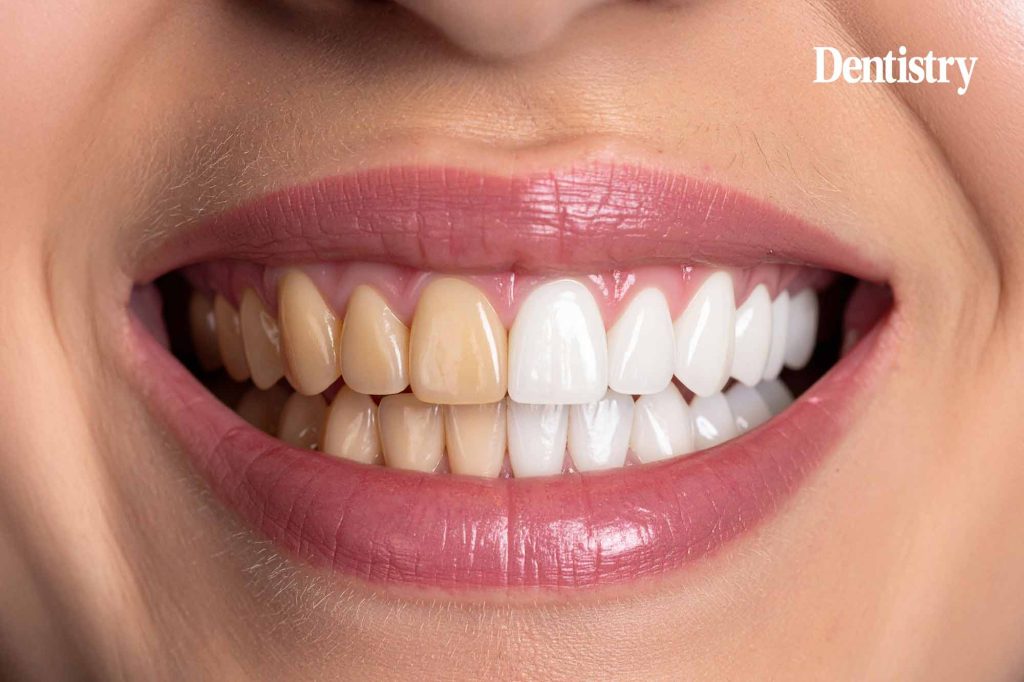
Having teeth that are the same colour was deemed more important to patients than a white smile in a new study.
Carried out at the University of Gothenburg – one of the first of its kind – the research shows that many people with a deviant color on a part of a tooth would like treatment.
Participants were asked to rate how satisfied they were with their own tooth colour and how they perceived unevenness of tooth color, which referred to deviant color on a part of a tooth and spots.
The results showed that 77% of participants were satisfied with their tooth colour, with no major differences between gender and age. In contrast, those who perceive having a deviant color on a part of a tooth were less satisfied with their tooth color.
A higher proportion of women (22%) than men (13%) had experience with tooth whitening. Of those who reported having a deviant color on a part of a tooth, 9% had color corrective treatment. Another 52% were interested in having it.
Rating tooth colour
Laura Ståhl is a PhD student at the Institute of Odontology at the University of Gothenburg, a dental professional in the Public Dental Service in Gothenburg and the study’s first author.
‘What we found is that the participants in the study notice uneven tooth color, and that it is something that is perceived negatively,’ she said.
‘We also observed that those who are more satisfied with their own tooth color placed more importance on the color of teeth, both their own and that of others.’
She added: ‘It is important to understand how young people view their teeth, to listen to them and take their concerns seriously. Oral health is a broad concept – it is not only about having a healthy mouth, but also about being able to smile, laugh, and show self-confidence in every expression.’
Participants were also shown photos of different teeth with and without deviant color on a part of the enamel of the front teeth and then asked to rate aesthetic impression. When participants looked at the photos and found the tooth color unacceptable, 90% of them cited the color deviation as a cause – with shade and extent also playing a role.
Knowledge on risks
‘Teeth are seen as an important part of the appearance, and some young people are troubled by having a deviant colour on part of a tooth,’ said Nina Sabel, associate professor at the Institute of Odontology at the University of Gothenburg and paediatric dentist.
‘Other treatments will not give you a total makeover, but can lead to improvements if done correctly. Dentistry does not own the issue of teeth whitening, which I wish it did.
‘Different color deviations have different causes, requiring different types of treatment. In addition, dental professionals are knowledgeable about the risks and can prevent injury to gums, for example.
‘A tip to minimising side effects is to ensure that the bleaching is done in a controlled manner with a low concentration of hydrogen peroxide. It is also important not to over-bleach, because once your teeth have turned neon white, you cannot go back.’
Follow Dentistry on Instagram to keep up with all the latest dental news and trends.