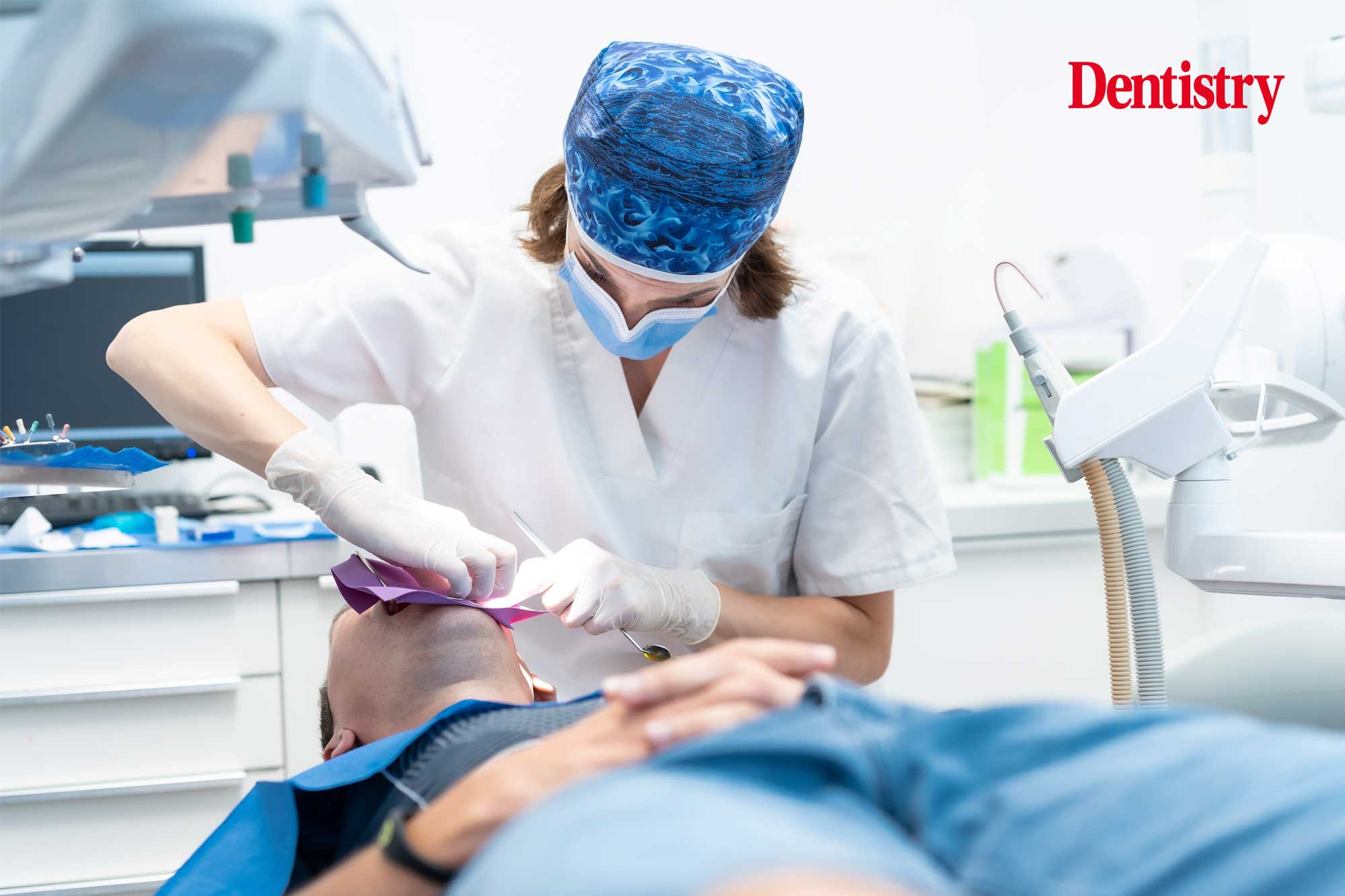
Joseph Sabbagh explains how root canal treatments can be used in daily practice using GenENDO instruments and BioRoot Flow.
Root canal treatment (RCT) is a common endodontic procedure aiming to preserve a tooth through a proper cleaning, shaping and obturation of the root canal system. When performed properly, the success rate of vital endodontic treatments varies between 88.6 to 90.3% (Ricucci et al, 2011) while for retreatments it is between 65.5% and 77.6% (Stueland H et al, 2023).
Recent innovations in endodontics are revolutionising root canal therapy by integrating advanced imaging, precision instruments and enhanced disinfection methods, making the treatment easier and more predictable. Three-dimensional imaging, particularly cone-beam computed tomography (CBCT), enables detailed visualisation of complex canal morphologies and guided access, enhancing diagnostic precision, treatment planning and maximising tooth preservation and clinical outcomes (Peters and Arias, 2022).
Cleaning and shaping of a root canal system relies on using flexible nickel-titanium (NiTi) files, with simplified sequences, improved alloys together with apex locators and enhanced rotary motors, facilitating efficient shaping of curved canals while minimising procedural errors. This enables subsequent steps, including coronal flaring, creating a reproducible glide path, determining the working length, and carrying out biomechanical preparation and disinfection of the root canal system.
What is the aim of root canal treatment?
Ultimately, the procedure aims to achieve effective obturation, ensure the longevity of the restoration, and preserve as much of the natural tooth structure as possible (ESE, 2006).
The dental community has understood that adequate endodontic treatment does not mean enlargement of the canals, but rather a proper disinfection of the root canal system combined to a three-dimensional sealing. Several techniques using gutta percha, delivered in different modes are used for the obturation phase.
The warmvertical technique, described by Schilder in 1972, was considered the gold standard in endodontics. Although showing good clinical outcomes, this technique is complex and involves several steps.
Recent development in biomaterials has led to a new category of products called bioceramics, based on calcium silicate (CSCs). They can be used as cements in restorative dentistry for pulp vitality preservation or as sealers in endodontics (Dong and Xu, 2023).
In addition to having excellent physical and chemical properties, CSCs play an important role in endodontic therapy due to their biocompatibility and bioactivity when placed in contact with pulp tissues (Haridas et al, 2024).
During the obturation step, the use of a bioceramic sealer combined with a single gutta percha cone made this phase easier and more predictable.
The following clinical case report details the root canal treatment of a molar using a simplified GenENDO Revo-S+ (Septodont) NiTi instrumentation, combined with an obturation of the root canal systems using a recent bioceramic sealer, BioRoot Flow (Septodont).
Case report
Clinical signs and symptoms
A 35-year-old female patient presented to the dental clinic with severe spontaneous pain localized at the lower left posterior quadrant. The pain persisted for three days and intensified with hot stimuli.
A periapical radiograph revealed a large composite restoration with secondary caries in the mesial box on tooth #36 (mandibular first molar) with a widened periodontal ligament space around the mesial root, and no evidence of periapical radiolucency. No swelling or sinus tract was visible.
Diagnosis
Vitality testing with cold spray elicited a lingering pain response. Based on clinical and radiographic findings, the tooth was diagnosed with acute irreversible pulpitis. A non-surgical root canal treatment was planned.
Procedure and treatment
Following local anesthesia (Septanest,1:200.000, Septodont, Saint-Maur des Fossés, France) an endodontic access cavity was performed using round diamond bur and Endo Z carbide tungsten bur. Four canal orifices were identified: mesiobuccal (MB), mesiolingual (ML), distobuccal (DB) and distolingual (DL). The working field was isolated using a latex rubber dam fixed with a Softclamp (Kerr, Orange, USA) to avoid any gingival fluid contamination or accidental instrument swallowing.
A GenENDO K-File 010 (Septodont) was used to scout the canals patency. Final working length was determined using an apex locator and confirmed radiographically. The MB and ML canals had separate apices, while the distal canals were wide and merged into a single foramen.
Shaping
Cleaning and shaping were initiated using a crown-down technique with rotary files GenENDO Revo-S+ SC1, SC2, SU (Septodont). Diameter 25, taper .04 and .06. The coronal flaring of the canals was performed using the GenENDO Revo-S+ SC1 instrument (25/.06) with a downward motion, enlarging the coronal third to remove any interferences and straighten the path.
Shaping of the canal was done using the GenENDO Revo-S+ SC2 instrument (25/.04) to the apex by removing dentin from the walls. This was followed by final shaping with the GenENDO Revo-S+ SU (25/.06) for a uniform taper and optimal preparation, using one centered downward and one upward movement with selective wall support, finishing at working length.
Irrigation
Copious irrigation with 3.5% sodium hypochlorite was performed throughout instrumentation, and canals were irrigated with EDTA to remove the smear layer. Rechecking of canal patency was regularly ensured using a GenENDO K-File 010 between each instrument.
In the absence of swelling and complete drying of the canals, contemporary endodontic strategy recommends the obturation of the canal system during the same session. After final irrigation, the canals were dried using or or two paper points to avoid over drying. BioRoot Flow, a bioceramic sealer recently introduced, was injected in each canal with a low pressure.
A single cone technique, using one master cone of gutta percha, previously calibrated and confirmed radiographically, was inserted in each of the canals . Then the gutta percha points were cut using a heat cutting device and compactedwith an endo plugger. A Teflon pellet was placed in the access cavity and covered by a temporary cement.
Follow-up and outcome
At a one-month follow-up, the patient reported no pain or discomfort. Clinical testing showed no tenderness. The tooth remained functional and symptom-free.
Discussion
Endodontic treatment of mandibular molars can be challenging due to variations and complexities in root canal morphology. In this case, the presence of four canals required careful exploration and negotiation. Use of magnification, electronic apex location, and simplified rotary instrumentation enhanced the precision of canal shaping. The obturation phase was performed with a bioceramic sealer and a single gutta percha cone, which is being used more and more in endodontics.
Successful root canal treatment depends on adequate diagnosis, canal disinfection, and hermetic obturation. Early intervention prevented the progression of periapical disease and preserved the natural tooth structure, avoiding extraction.
Conclusion
This case highlights the importance of comprehensive diagnostic and clinical protocols in the endodontic treatment of mandibular molars. With proper technique and patient compliance, even complex molars can be predictably treated, resulting in long-term tooth retention and functional restoration.
Find out more about GenENDO and BioRoot Flow.
This article is sponsored by Septodont.