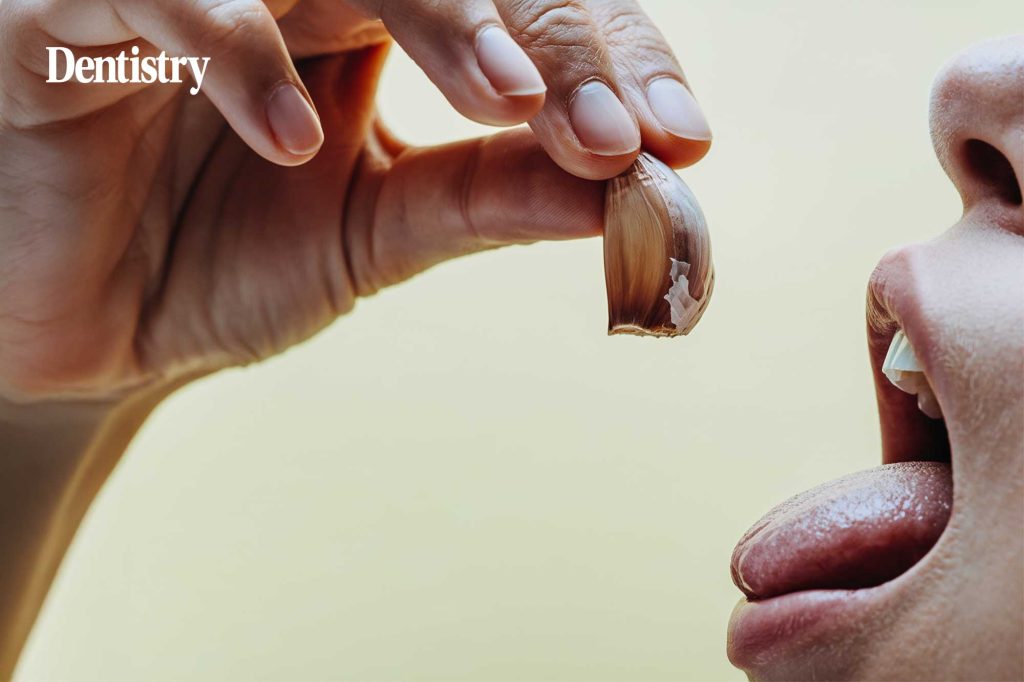
Garlic extract has been found to have similar antimicrobial efficacy to other widely used antiseptic and disinfectant mouthwashes like chlorhexidine by a new literature review.
University of Sharjah researchers compared the antimicrobial properties of garlic extract with those of chlorhexidine in clinical practice. The results suggest that higher concentrations of garlic extract mouthwash has antimicrobial efficacy comparable to chlorhexidine.
The review says: ‘The effectiveness varied based on mouthwash concentration and duration of application, contributing to differences in outcomes. Some studies favored chlorhexidine for maintaining higher plaque/salivary pH, while others reported garlic extract to be more effective at certain concentrations.’
This research was motivated by concerns around side effects and antimicrobial resistance caused by chlorhexidine. Garlic has therefore been proposed as a herbal alternative.
Are there any downsides to garlic as a mouthwash alternative?
However, garlic was also not without side effects, with some studies reporting ‘greater discomfort’ from the garlic substitute. Reported side effects include a burning sensation and an unpleasant odour.
The review concludes that garlic may be ‘a viable alternative to chlorhexidine’ due to its ability to significantly reduce bacterial counts from the baseline.
On the other hand, it also emphasises a need for further clinical research involving larger sample sizes and extended follow-up to confirm the results.
The authors described antimicrobial mouthwashes as ‘an essential adjunct element in oral and dental care’ in preventing oral diseases caused by bacteria, fungi, or viruses.
What other natural substances could be used as dental disinfectants?
Several other unconventional substances have been explored as dental disinfectant alternatives. In August, a literature review tested the efficacy of several natural substances in this context.
Among the plant-based products tested, clove oil, tea tree oil, neem (Indian lilac) and green tea extract were found to disrupt microbial cell membranes, prevent biofilm formation, and suppress genes affecting the severity of infection. Cinnamon oil also appeared to affect bacteria by disrupting its signalling and targeting its cell walls.
In the animal-based category, propolis and honey were shown to inhibit microbial growth, promote wound healing and reduce inflammation.
Finally, minerals such as clay and bacteriocins were found to absorb toxins and disrupt microbial membranes.
Another recent study found that a substance naturally occurring in maple syrup prevented caries-causing biofilm from sticking to teeth. The compound, epicatechin gallate, has been described as ‘a powerful and safe alternative to traditional plaque-fighting agents’.
Follow Dentistry.co.uk on Instagram to keep up with all the latest dental news and trends.