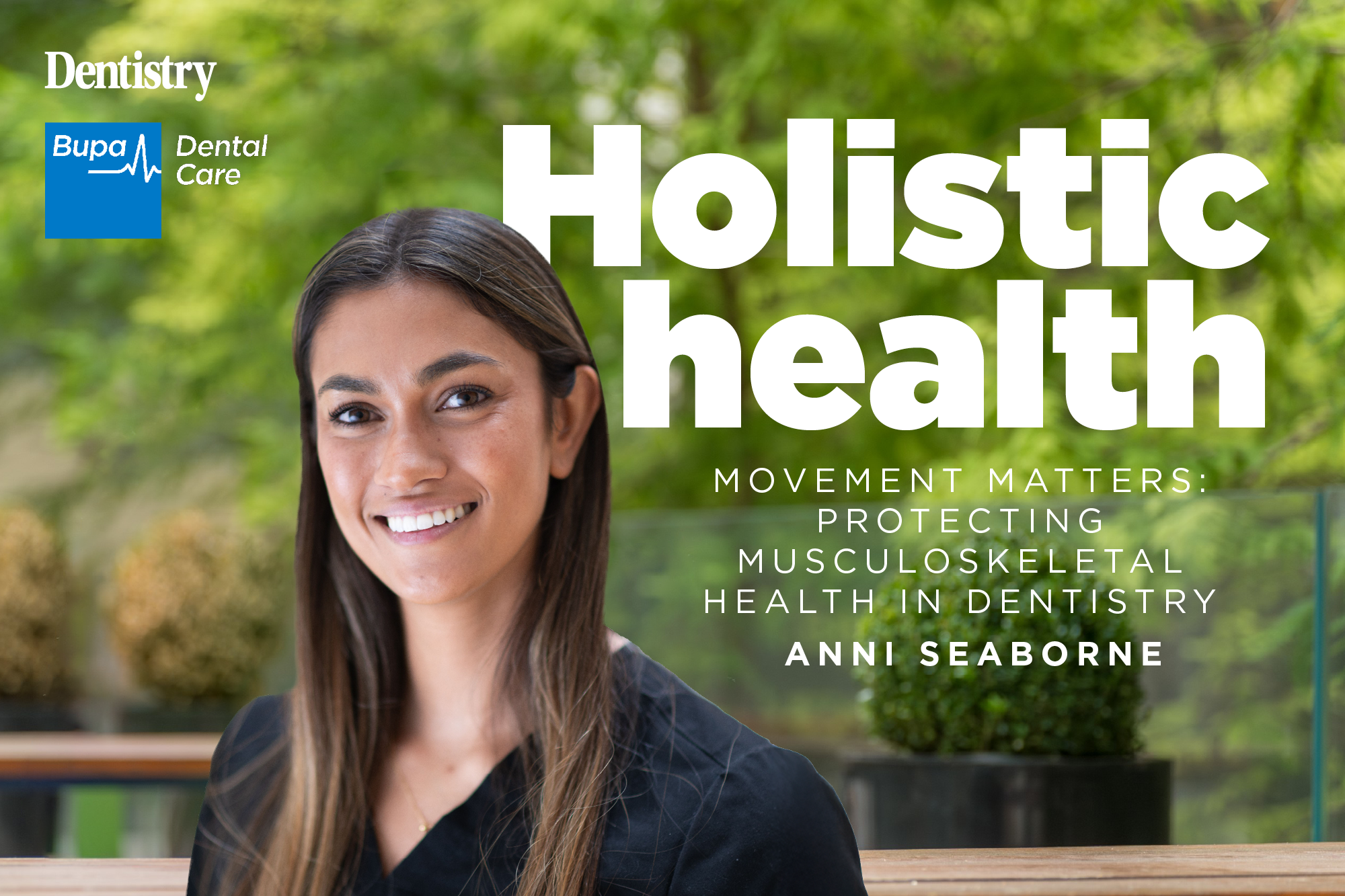
Anni Seaborne highlights the importance of musculoskeletal health and how dental professionals can protect theirs in practice.
Working in dentistry often means long hours in fixed positions, which can lead to tension in the back, neck, and shoulders. For Dr Anni Seaborne, head of general dentistry at Bupa Dental Care, staying mindful of movement and posture has become essential to maintaining musculoskeletal (MSK) health and overall wellbeing.
Why musculoskeletal health matters
Dentistry involves fine motor skills, close-up work, and maintaining steady positions, all of which can place strain on the body. Over time, these patterns can contribute to common MSK issues such as back or neck tension, shoulder stiffness, or wrist discomfort.
I’ve learned that recognising these signs early and taking small steps to support my body makes a big difference. The body is a clinician’s most important tool, so supporting it through movement and posture awareness helps prevent discomfort, boost energy, and maintain strength throughout the day.
If you notice an ache or discomfort, don’t ignore it. Treat it as you would a gym injury by prioritising recovery and giving your body the care it needs. Gentle stretching, strengthening exercises and rest can make a big difference. If pain persists or worsens, seek advice from a physiotherapist. Think of your body as an essential part of your clinical toolkit, maintaining it is key to staying strong, comfortable, and effective in your role.
Simple habits that work
I start with gentle stretches before and after my shift to ease tension and improve flexibility. I pay close attention to my posture – techniques like keeping a neutral spine and using optimal seating help me stay comfortable.
I’ve learned that ergonomics really matters. It’s all about designing workspaces and tools to fit the body. For example, an ergonomic chair supports the natural curves of the spine and encourages good posture, reducing back and neck strain during long procedures.
Loupes also help with fine details without leaning forward, which promotes better posture and reduces eye strain. Choosing refractive loupes can make an even bigger difference. They allow you to maintain a more upright position by adjusting the angle of view, reducing strain on the neck and shoulders over time.
I also choose lightweight, well-shaped handpieces to minimise wrist fatigue and repetitive strain. These small changes add up to big benefits for long-term health.
Movement that fits your day
I’ve found that incorporating movement doesn’t require major changes – small, intentional actions keep my body energised throughout the day. Take short breaks between patients to stretch or walk, helping to relieve tension and keep your body moving. Alongside these quick breaks, I also incorporate simple stretches during clinic time to ease tension and support posture.
An upper trapezius stretch is great for easing tightness in the neck and shoulders. Sit or stand upright, gently tilt your head toward one shoulder, and keep your shoulders relaxed. For a deeper stretch, place your hand on the side of your head and apply light pressure. Hold for 15-30 seconds, then repeat on the other side.
A scapula pinch helps strengthen the muscles around your shoulder blades and improve posture. Sit or stand tall, then gently pull your shoulder blades back and slightly down as if pinching them together. Hold for three to five seconds, release, and repeat a few times. These small movements can make a big difference when you’re spending long periods in static positions.
Even short sessions of yoga or pilates during the day help me stay flexible and relaxed, supporting both my physical and mental health.
Prioritising movement and musculoskeletal health aren’t just about avoiding discomfort – it’s about investing in your long-term wellbeing and performance. By making small, intentional changes, dental teams can feel stronger, more energised, and better connected. When your body feels good, your mind follows, creating the clarity and resilience to deliver exceptional care every day.
For more information on careers at Bupa, you can visit: jobs.bupadentalcare.co.uk.
Read more from this series:
- Supporting wellbeing as the seasons change
- What is the role of dental nurses in anxiety management?
- Supporting those experiencing bereavement in the dental workplace
- Managing TMD, bruxism and TMJ disorders in general practice
- Supporting lifelong oral health from the very first visit
This article is sponsored by Bupa Dental Care.